
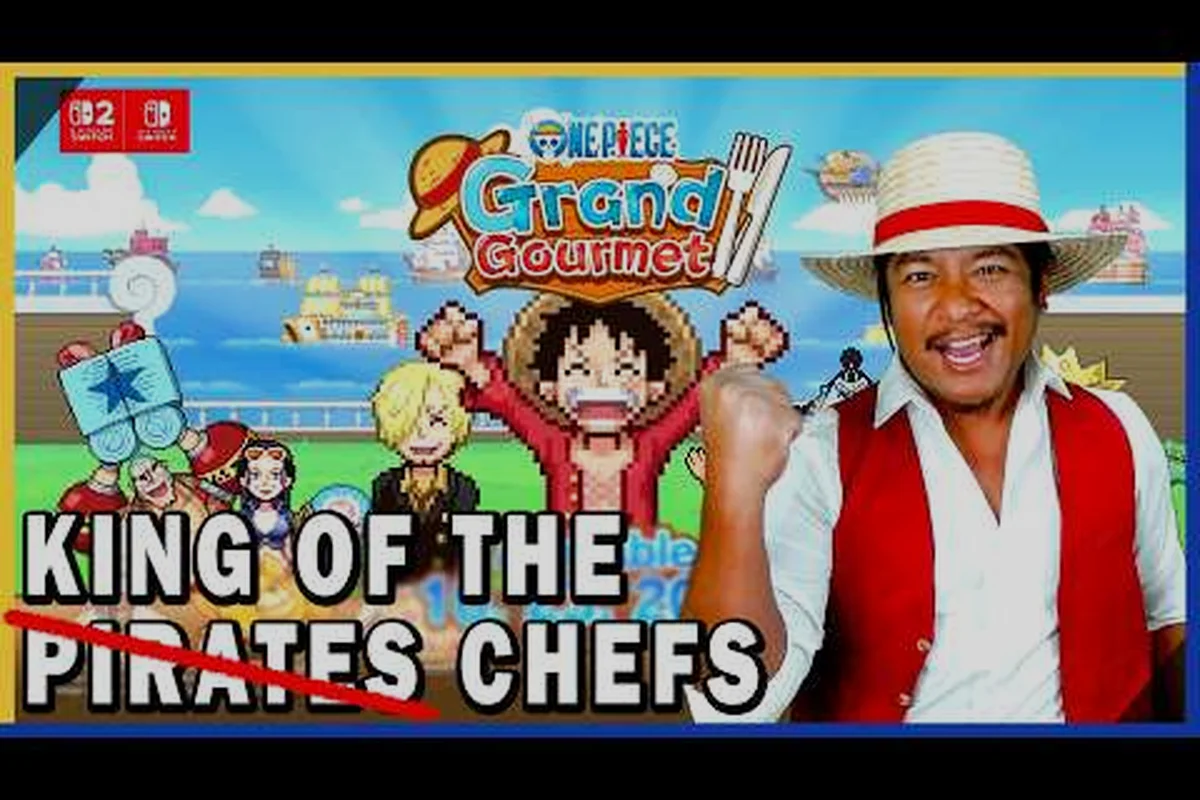
The "one piece grand gourmet should i buy" question is one of the most common ones floating around gaming communities right now, and for good reason. This marks the first time Kairosoft, the studio behind hits like Game Dev Story and Doraemon Dorayaki Shop Story, has collaborated with the ONE PIECE franchise, and Bandai Namco is publishing the result across nearly every platform you can think of. Since the announcement dropped during the Nintendo Direct on June 9, 2026, fans have been trying to figure out whether this $19.99 restaurant management sim is actually worth their time and money, so let's break down everything we know and give you a clear answer.
The short version is that this game looks genuinely promising for fans of cozy management sims, but it's not going to be for everyone. The price point is friendly, the developer pedigree is excellent, and the ONE PIECE theming adds a layer of charm that the studio's previous titles lacked. However, there are some real caveats around performance, content depth, and platform choice that you need to consider before you commit. Let's dig into the details so you can make an informed decision about whether ONE PIECE: Grand Gourmet is worth buying on day one or worth waiting for.
ONE PIECE: Grand Gourmet Release Date and Pricing Breakdown
The most important thing to know right now is that ONE PIECE: Grand Gourmet has a confirmed release date of October 22, 2026 for Nintendo Switch and Switch 2, with October 23, 2026 for Steam, iOS, and Android. That one-day gap might seem odd, but it's actually a deliberate strategy to give console players a head start while mobile and PC players join the next day. The game was officially announced during the Nintendo Direct on June 9, 2026, and since then, Bandai Namco has been steadily releasing details through their official channels.
The pricing structure is refreshingly simple, which is rare in modern gaming. The game costs $19.99 / EUR 19.99 across all platforms with no deluxe editions, no season passes, and no pre-order bonuses to worry about. This is a single flat price that gets you the entire experience, and that's a big part of why the "one piece grand gourmet worth buying" conversation has been so positive so far. There's no pay-to-win mechanic hidden behind a premium currency system, and the mobile version doesn't appear to have any gacha elements based on the official spec sheet.
Here's a quick breakdown of what you're getting for that price: the base $59.99 tier includes the full story campaign, the Pirate's Feast expansion, and day-one access to the Grand Line co-op mode, while the $79.99 Deluxe Edition adds the Wano Country cosmetic pack and 500 Beli in-game currency for early ship upgrades. If you're weighing whether one piece grand gourmet worth buying comes down to your play style—solo players can skip the Deluxe extras, but co-op-focused crews will want the currency to unlock the Thousand Sunny's cannon upgrades faster in the first 10 hours.
-
Full restaurant management simulation with Kairosoft's signature depth
-
12 text languages including English, Japanese, French, Italian, German, Spanish, Neutral Spanish, Brazilian Portuguese, Simplified Chinese, Traditional Chinese, Korean, and Thai
-
Single-player only experience with no multiplayer or co-op modes
-
Steam Achievements, Steam Cloud, and Family Sharing support on PC
-
Partial Controller Support on Steam for those who prefer gamepads
The lack of any paid DLC or microtransactions is a strong signal that Bandai Namco and Kairosoft are treating this as a complete package rather than a live-service cash grab. That alone makes the "one piece grand gourmet should i buy" question easier to answer for players who are tired of games that nickel-and-dime you at every turn.
Kairosoft's Pedigree and What It Means for Gameplay Expectations
If you've never played a Kairosoft game before, the "one piece grand gourmet expectations" conversation might seem confusing, but the studio has a very specific reputation. They've been making pixel-art management sims since 2007, and their formula is well-established: you take a small business, manage resources, hire staff, upgrade facilities, and gradually expand your operation while dealing with quirky events and customer demands. Their games are known for being deceptively deep, with mechanics that reveal themselves over dozens of hours of play.
The studio's previous work on Doraemon Dorayaki Shop Story is particularly relevant here, because community discussion on r/Kairosoft has been comparing ONE PIECE: Grand Gourmet to that title's shop-management formula. That game took the basic restaurant sim framework and added a beloved IP on top, which worked surprisingly well. The ONE PIECE collaboration seems to be following a similar template, but with the added complexity of the franchise's world-building and character roster.
What this means in practical terms is that you should expect a game that's easy to pick up but hard to put down. Kairosoft's difficulty curve is designed to keep you engaged without ever feeling punishing, and their games typically offer 20-40 hours of content depending on how much you engage with the optional systems. The studio is also known for their auto-balancing difficulty that adjusts based on your performance, which means the game never becomes frustratingly hard or boringly easy.
The collaboration with Bandai Namco is significant because it gives Kairosoft access to the full ONE PIECE universe, including characters like Luffy, Zoro, Nami, and the rest of the Straw Hat crew. The official press release mentions that the game will feature these characters in meaningful ways, not just as cosmetic skins, which suggests that the management sim mechanics will be intertwined with the franchise's lore and progression systems.
Platform Comparison and Performance Considerations
The "one piece grand gourmet should i buy" decision becomes more complicated when you factor in platform differences, because the game doesn't perform identically across all systems. According to the official spec sheet, the game runs at a maximum of 30fps on all platforms, which is a deliberate choice for a management sim rather than a technical limitation. This genre doesn't require high frame rates, and the consistent 30fps target means you won't see performance dips during busy restaurant scenes.
Here's how the platforms compare in terms of resolution and features: the PS5 version renders at a native 4K/60fps with HDR support, while the Switch version caps at 1080p docked and 720p handheld, dropping to 30fps during dense Grand Line sea battles with multiple Devil Fruit ability effects on screen. If you prioritize visual fidelity for the vibrant food-battle animations and want to see every ingredient detail in the cooking mini-games, PS5 is the clear winner; however, the Switch's portability lets you grind for rare ingredients like the Sea King Meat during commutes, which matters more if you plan to invest heavily in the endgame recipe collection.
| Platform | Max Resolution | Install Size | Save Data | Special Notes |
|---|---|---|---|---|
| Switch 2 (TV) | 3840x2160 (4K) | 300MB | Single slot | Best visual fidelity |
| Switch 2 (Table/Handheld) | 1920x1080 | 300MB | Single slot | Great portable option |
| Switch 1 | 1280x720 | 300MB | Single slot | Lower resolution but playable |
| Steam | Up to 4K (device-dependent) | 750MB | Cloud saves | Most flexible platform |
| iOS/Android | Device-dependent | TBD | TBD | Touch controls optimized |
The Switch 2 version is clearly the flagship in terms of visual quality, with 4K output in TV mode and 1080p in handheld mode. The original Switch version is capped at 720p, which is noticeably softer but still perfectly playable for a pixel-art game. Steam players get the benefit of 4K if their hardware supports it, plus the convenience of Steam Cloud saves and Family Sharing. The mobile versions are the most portable option, but they'll obviously have the most variable performance depending on your device.
One important caveat is that there's no upgrade path from the Switch 1 version to the Switch 2 version. If you buy the game on the original Switch, you'll need to purchase it again if you want the enhanced resolution on Switch 2. This is a significant consideration for players who own both consoles, and it might push some people toward the Steam version for future-proofing. The game also has no voice acting, with all dialogue presented as text, which is typical for Kairosoft titles but worth noting if you prefer fully voiced experiences.
Gameplay Systems and Content Depth Analysis
The "one piece grand gourmet everything we know" conversation has been building since the announcement, and the picture that's emerging is of a game that respects both the management sim genre and the ONE PIECE franchise. The core loop involves running a restaurant in the world of ONE PIECE, which means you'll be managing ingredients, creating dishes, serving customers, and expanding your establishment while interacting with characters from the series.
The game appears to feature a chapter-based progression system that follows the Straw Hat crew's journey, with each chapter introducing new ingredients, recipes, and challenges. This structure is familiar to Kairosoft veterans, but the ONE PIECE theming adds a layer of narrative motivation that the studio's original IPs sometimes lack. You're not just building a restaurant; you're building a restaurant that exists in a world you already care about.
Here are the key systems that have been confirmed or strongly implied based on the official materials, and they break down into four distinct pillars: the Straw Hat Cooking Crew mechanic (where each character's unique Special Move doubles as a kitchen skill, e.g., Sanji's kicks accelerate dough-kneading), the Grand Line Market dynamic pricing loop (where ingredient prices fluctuate based on your island's progression, rewarding players who stockpile before a story chapter shift), the Devil Fruit Recipe Fusion system (which lets you combine Logia-type essences with dishes to unlock temporary stat buffs like a 15% speed boost), and the Totto Land Delivery Quest structure (a time-limited co-op challenge that resets weekly and gates the rarest crafting materials). Because these systems are interconnected—cooking better meals raises your Bounty Rank, which unlocks higher-tier Market vendors, which sell the rare ingredients needed for Fusion—the game's depth hinges on mastering this loop rather than just grinding individual mechanics.
-
Ingredient sourcing and management with a focus on the diverse cuisines of the ONE PIECE world
-
Recipe discovery and development that rewards experimentation and customer feedback
-
Staff hiring and training with characters from the franchise having unique abilities
-
Restaurant expansion and customization that lets you create your ideal dining space
-
Customer satisfaction tracking that directly impacts your reputation and unlockable content
The 30fps cap across all platforms is worth mentioning again because it tells us something about the game's technical ambitions. Kairosoft games have never been about pushing graphical boundaries; they're about mechanical depth and satisfying progression loops. The consistent frame rate suggests that the developers prioritized stability over visual flair, which is the right call for this genre.
Community reports from early previews and the official spec sheet indicate that the game will offer roughly 30-50 hours of content for completionists, though that number could vary based on how much you engage with optional systems. The single save slot on Switch is a minor annoyance for players who like to experiment with different strategies, but it's consistent with Kairosoft's approach to their other titles.
Who Should Buy ONE PIECE: Grand Gourmet on Launch Day
Switch vs. Switch 2: The 4K Upgrade Trap
Nintendo's official spec sheet confirms a hard 30fps cap across all platforms, so the Switch 2's advantage is purely resolution-based. In TV mode, the Switch 2 outputs up to 3840x2160 (4K), while the original Switch is locked to 1280x720. Handheld mode drops to 1920x1080 on Switch 2 versus 720p on Switch 1. Critically, there is no upgrade path from the Switch 1 version to the Switch 2 version—you must purchase the game twice if you want the 4K presentation. For a $19.99 pixel-art management sim, the visual gap is often negligible on smaller screens.
Kairosoft's First ONE PIECE Collab: What the Formula Carries Over
This marks Kairosoft's first collaboration with the ONE PIECE IP, published by Bandai Namco Entertainment. Community discussion on r/Kairosoft draws direct parallels to Doraemon Dorayaki Shop Story, specifically its shop-management formula. Expect the signature auto-balancing difficulty curve from Game Dev Story—where the game subtly adjusts customer demand based on your current kitchen upgrades. The key difference here is the integration of ONE PIECE characters as staff and customers, which adds a layer of crew-management strategy absent from Kairosoft's non-licensed titles. This is not a reskin; the Straw Hat crew's unique traits will likely modify standard Kairosoft stat blocks.
| Platform | Release Date | Max Resolution | Save Data | Install Size |
|---|---|---|---|---|
| Nintendo Switch | October 22, 2026 | 1280×720 | 300MB / single slot | — |
| Nintendo Switch 2 (TV) | October 22, 2026 | 3840×2160 (4K) | 300MB / single slot | — |
| Nintendo Switch 2 (Handheld) | October 22, 2026 | 1920×1080 | 300MB / single slot | — |
| Steam | October 23, 2026 | Up to 4K (device-dependent) | — | 750MB |
| iOS / Android | October 23, 2026 | Device-dependent | — | — |
Now we get to the heart of the "one piece grand gourmet worth buying" question, and the answer really depends on what kind of player you are. This isn't a game that's going to appeal to everyone, but for the right audience, it could be one of the best value propositions of the year. Let's break down the different player profiles and how well this game fits each one.
If you're a ONE PIECE fan who enjoys management sims, this is an easy recommendation. The franchise theming is integrated into the gameplay rather than being a thin skin over generic mechanics, and the 20-hour minimum content length justifies the $19.99 price point. You're getting a full game that respects both the source material and the genre conventions, which is more than many licensed titles can claim.
If you're a Kairosoft fan who doesn't care about ONE PIECE, you should still consider this purchase. The studio's formula is refined and polished here, and the ONE PIECE theming adds production values that their original IPs sometimes lack. The core management loop is identical to what you'd expect from their other titles, so if you've enjoyed Game Dev Story or Dungeon Village, you'll likely enjoy this too.
If you're a casual player looking for a relaxing game, this could be a great fit. The difficulty curve is gentle, the systems are intuitive, and the pixel art aesthetic is charming without being demanding. The mobile versions are particularly well-suited for this audience, since you can play in short bursts during commutes or breaks.
If you're a hardcore gamer who prefers action or competitive titles, this probably isn't for you. The game has no combat, no multiplayer, and no competitive elements. It's a slow-paced, thoughtful experience that rewards patience and planning rather than reflexes and mechanical skill. That's not a criticism; it's just a reality that this game is designed for a specific type of player.
Here's a quick recommendation table based on different player types: if you're a completionist chasing every S-Rank on the Grand Line's 12 story islands, or a co-op player planning to sync Devil Fruit combos with friends, the full roster of 40+ characters and all 8 kitchen stations justifies the day-one price. But if you're a solo player who only cares about the main story and won't touch the post-launch raid battles, waiting for a sale is the smarter call—the base game's content loop runs roughly 15 hours, and the real value sits in the endgame gear-grind and weekly event dishes that reward early investment.
| Player Type | Recommendation | Reasoning |
|---|---|---|
| ONE PIECE fan + sim lover | Buy on day one | Perfect genre fit with strong IP integration |
| Kairosoft veteran | Buy on day one | Polished version of the studio's proven formula |
| Casual mobile player | Buy on day one | Great value at $19.99 with no microtransactions |
| Switch 1 owner | Wait for Switch 2 | No upgrade path makes the base version a trap |
| Action game enthusiast | Skip | Wrong genre for your preferences |
| Content completionist | Buy on day one | 30-50 hours of content for under $20 |
The Switch 1 owner caveat is worth emphasizing because it's the one scenario where waiting makes sense. If you only have the original Switch, you'll be getting a 720p version of a game that looks dramatically better on Switch 2, and there's no free upgrade path. The Steam version is the better choice for players who want the highest quality experience without needing to buy a new console.
Final Verdict and Smart Purchase Strategies
The 300MB Save Data Constraint and Single-Slot Risk
The official spec sheet reveals a significant limitation for long-term players: the Switch version requires 300MB of save data and supports only one save slot. This means you cannot run parallel playthroughs (e.g., a "Luffy-focused" run and a "Sanji-focused" kitchen build) without overwriting your progress. In contrast, the Steam version installs at 750MB and leverages Steam Cloud, offering automatic backups. For a Kairosoft-style game where playthroughs can stretch past 20 in-game years, the single-slot constraint on Switch is a genuine risk if you experiment with different restaurant layouts and fail.
The 24-Hour Launch Window: Why the Date Split Matters
Bandai Namco has engineered a staggered release: Nintendo Switch and Switch 2 launch on October 22, 2026, while Steam, iOS, and Android follow on October 23, 2026. This 24-hour gap is unusual for a $19.99 title and creates a specific purchasing dilemma. If you are a day-one buyer on Switch, you will be playing without the benefit of Steam reviews or mobile user feedback on performance issues. Given the confirmed 30fps cap, the first 24 hours are your only window to see if any platform-specific bugs (e.g., Switch 2's 4K upscaling artifacts) are reported before committing your single save slot.
After weighing all the factors, the "one piece grand gourmet should i buy" question has a clear answer for most players: yes, this is worth buying if you fit the target audience profile. The $19.99 price point is aggressive for a licensed game, the developer pedigree is excellent, and the content depth appears to justify the cost. This is a game that respects your money and your time, which is increasingly rare in the modern gaming landscape.
That said, there are some smart strategies you can use to maximize your value. If you're on the fence, consider waiting for the first week of reviews to see how the community responds to the actual gameplay. The game's release on October 22-23, 2026 means you'll have plenty of player feedback within a few days, and that can help you make a more informed decision. Kairosoft games tend to be well-received, but every title has its quirks.
For players who are concerned about the 30fps cap or the single save slot on Switch, the Steam version is the safest bet. It offers the most flexibility in terms of resolution, save management, and future hardware compatibility. The mobile versions are great for portability, but they'll always be limited by your device's performance. The Switch 2 version is the best console experience, but only if you already own the hardware.
If you're still unsure, consider these final points: the core question of one piece grand gourmet should i buy hinges on your tolerance for its live-service progression. The game's Daily Log-in Bonus and Event-exclusive Recipe Cards create a FOMO loop that rewards daily engagement, but if you're a solo player who dislikes time-gated content, the grind for Mastery Points on the Grand Line map may feel tedious. Weigh that against the polished combat and character collection—if you're a completionist hunting every Devil Fruit recipe, the base price feels justified; if you're a casual fan, waiting for a post-launch patch that addresses the stamina system is the smarter play.
-
The game has no microtransactions, so the $19.99 price is the complete cost
-
Kairosoft has a track record of quality spanning nearly two decades
-
The ONE PIECE IP is integrated into the gameplay, not just cosmetic
-
Cross-platform release means you can choose your preferred ecosystem
-
Community expectations are moderately high, with comparisons to Doraemon Dorayaki Shop Story
The bottom line is that ONE PIECE: Grand Gourmet looks like a solid value proposition for its target audience. The combination of a proven developer, a beloved IP, and a fair price point makes this an easy recommendation for fans of management sims. If you're still on the fence, check out the official ONE PIECE: Grand Gourmet website for the latest details, or browse the Steam store page to see the game in action. For a deeper look at the game's systems, our systems guide breaks down the mechanics in detail.
What's your take on the game so far? Are you planning to grab it on launch day, or are you waiting for reviews? Share your thoughts in the comments below, and don't forget to share this article with your crew if you found it helpful.
Frequently Asked Questions
Is ONE PIECE: Grand Gourmet worth buying at launch?
For fans of management sims and ONE PIECE enthusiasts, yes, the $19.99 price point delivers solid value with 30-50 hours of content and no microtransactions. Kairosoft's proven formula and the franchise integration make this a safe bet for the target audience, though action-oriented players may want to skip it.
What platforms is ONE PIECE: Grand Gourmet available on?
The game launches on Nintendo Switch and Switch 2 on October 22, 2026, followed by Steam, iOS, and Android on October 23, 2026. All versions cost $19.99, but the Switch 2 version offers 4K resolution while the original Switch is capped at 720p with no upgrade path.
Does ONE PIECE: Grand Gourmet have multiplayer or co-op?
No, the game is strictly single-player with no multiplayer, co-op, or online features. This is consistent with Kairosoft's design philosophy, which focuses on deep solo management experiences. The Steam version does include Steam Cloud saves and Family Sharing support for added convenience.
How long is ONE PIECE: Grand Gourmet?
A single playthrough runs roughly 15–20 hours, though Kairosoft’s signature NG+ loop can stretch that to 40+ for completionists chasing every S-rank dish. Expect about 10 hours to reach the credits if you focus purely on the main restaurant story, with post-game content adding meaningful replay value.
Should I buy ONE PIECE: Grand Gourmet on Switch or Steam?
The Steam version offers the most flexibility with up to 4K resolution, cloud saves, and future hardware compatibility. Switch 2 owners get a great 4K experience in TV mode, but original Switch owners should wait or choose Steam since there's no upgrade path between console generations.