
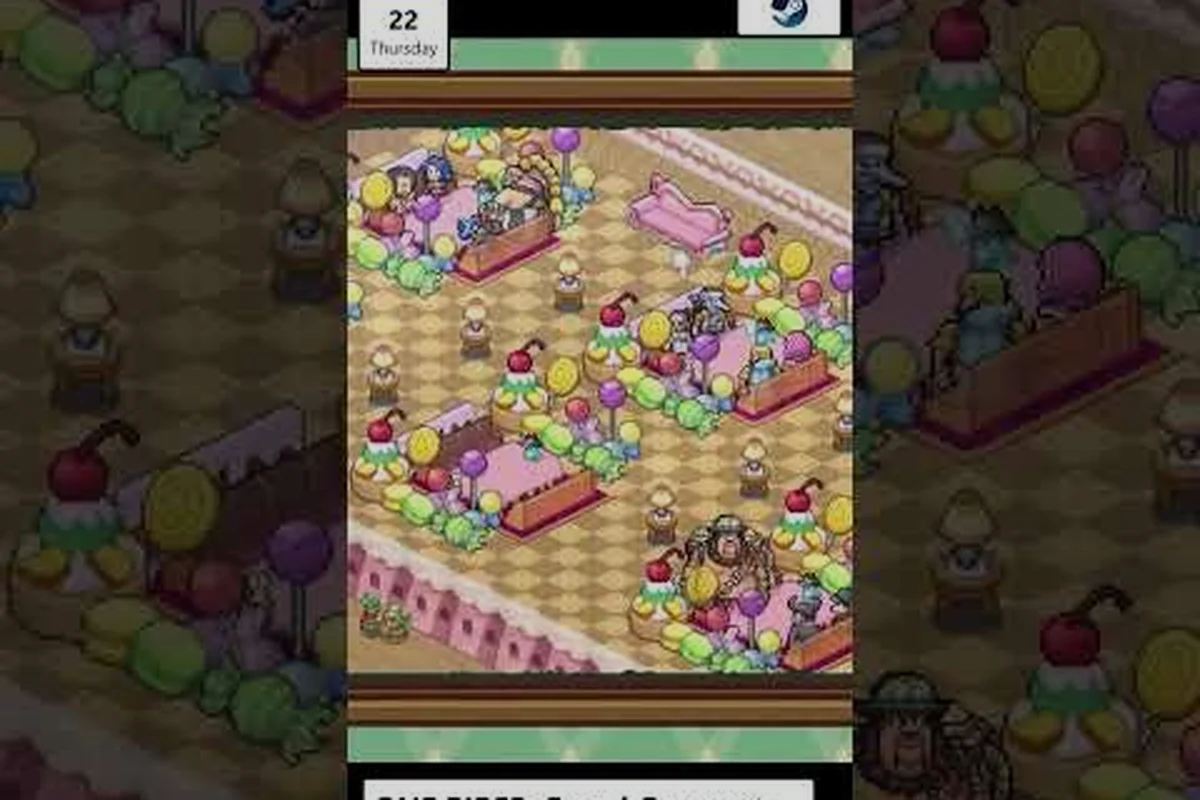
Kairosoft's first ONE PIECE collaboration, ONE PIECE: Grand Gourmet, layers the studio's signature management-sim depth onto the Straw Hat universe, and understanding how its systems interconnect is the difference between a thriving Baratie Branch 2 and a sinking ship. This one piece grand gourmet systems guide breaks down every core mechanic—from ingredient voyages to the regular-customer conversion loop—so you know exactly where to invest your time and Berries. Because the game auto-balances difficulty around your performance, mastering the underlying systems early is what actually determines whether this Kairosoft-style sim feels rewarding or frustrating.
The Core Systems Overview and How They Connect
Before diving into individual mechanics, it helps to see the full picture of how ONE PIECE: Grand Gourmet's systems feed into one another. Unlike a traditional restaurant tycoon where you simply buy ingredients and set prices, this game runs on a closed loop where each action in one system creates resources for another.
The official ONE PIECE: Grand Gourmet Steam page describes the core loop as: collect ingredients on adventures, develop dishes with Sanji, arrange meal sets, and decorate the interior. That description undersells how deeply these systems interlock. Here's the actual chain:
-
Adventure voyages consume stamina and return ingredients, recipes, and character-event triggers.
-
Dish development with Sanji converts those ingredients into sellable plates and unlocks new menu options.
-
Meal set arrangement determines how many dishes a single customer orders, directly impacting per-customer revenue.
-
Interior design and decor raises your Style Points, which influences whether visitors convert into regulars.
-
Regular customers generate consistent income and unlock character events that expand your roster.
-
Character events reward you with new staff, recipes, and story progression that unlocks further islands.
The critical insight is that no single system operates in isolation. Players who focus only on cooking while ignoring decor will plateau because their Style Points stall regular conversion. Similarly, players who chase adventures endlessly without developing dishes will starve their menu rotation. The game's auto-balancing difficulty curve, a hallmark of Kairosoft's design philosophy, adjusts challenges based on your restaurant's performance metrics, which means a balanced approach consistently outperforms min-maxing a single system.
Voyage Loop: Gathering, Storing, Stocking
Adventure mode is your primary source of ingredients, and it operates on a voyage-planning system that rewards preparation over brute-force grinding. You send crew members on expeditions to islands across the Grand Line, each with its own ingredient profile and encounter table.
Voyage Planning Fundamentals
Each voyage requires you to select a destination, assign crew, and manage a stamina budget. The islands you can access early include familiar locations from the anime, and each one drops a distinct ingredient pool. According to the official Japanese site, confirmed dishes include Water-Water Meat BBQ, Sea King Penne Gorgonzola, and Devil Fruit-inspired special creations, which means you'll need to visit specific islands to source their required components.
| Island Type | Primary Ingredients | Notable Drops | Recommended Crew |
|---|---|---|---|
| Early Sea | Fish, rice, basic vegetables | Sea King meat (rare) | Balanced crew |
| Sky Island | Cloud vegetables, exotic fruits | Grilled Sky Lobster materials | High stamina crew |
| Winter Island | Cold-water fish, root vegetables | Lapahn Potato Salad ingredients | Speed-focused crew |
| Devil Fruit Zone | Special fruit, rare herbs | Devil Fruit cooking materials | High luck crew |
The key to efficient ingredient gathering is matching crew assignments to island requirements. Characters with high stamina can run longer voyages, while those with specific skills unlock rare drop chances. Community reports on r/Kairosoft suggest that sending a balanced team rather than a single overpowered character yields better overall ingredient diversity, which matters because recipe development often demands multiple ingredient types simultaneously.
Pantry Capacity And Stock Discipline
Your ingredient inventory has a finite capacity, and this creates a natural rotation pressure. Rather than hoarding rare ingredients, the game encourages you to convert them into dishes quickly because developed dishes generate passive income even when you're not actively serving customers. This is a subtle but important mechanic: the menu you build acts as a second revenue stream that compounds with your active service loop.
Players who treat adventure mode as a "gather everything" exercise quickly hit storage caps and waste voyage efficiency. Instead, plan voyages around your current recipe-development goals. If Sanji's latest dish requires Sea King meat and Grand Line herbs, prioritize islands that drop those specific ingredients rather than sending expeditions to random locations.
How The Recipe Lab And Menu Slots Work
Dish development is where ingredients transform into profit, and it's the most mechanically dense system in ONE PIECE: Grand Gourmet. Working with Sanji, you combine ingredients to create new recipes, and each dish has hidden attributes that affect customer satisfaction and pricing power.
The Recipe Discovery Loop
Recipe development follows a trial-and-error system that rewards experimentation. Combining certain ingredient pairs unlocks new dishes, but the game doesn't tell you the exact combinations upfront. Instead, you'll see hints based on the ingredients you've already discovered, and successful combinations expand your recipe book.
| Development Phase | Action Required | Reward | Time Investment |
|---|---|---|---|
| Ingredient Discovery | Complete voyages to new islands | New ingredient types | 1-3 voyages |
| Recipe Experimentation | Combine ingredients in Sanji's kitchen | New dish unlock | 2-5 combinations |
| Dish Refinement | Cook the same dish multiple times | Quality improvement | 3-5 service cycles |
| Menu Integration | Add dish to meal sets | Revenue increase | Immediate |
The dish quality system is worth understanding early. Each time you cook a dish, it gains experience, and higher-quality versions sell for more while boosting customer satisfaction more significantly. This means your oldest dishes—the ones you've cooked hundreds of times—become your most valuable menu items, not your newest discoveries.
Slotting Dishes Into Set Menus
Meal sets are the game's answer to combo pricing. By arranging dishes into sets, you encourage customers to order multiple items, which increases average revenue per customer. The set construction screen shows you which combinations customers prefer, and matching those preferences yields a satisfaction bonus that accelerates regular conversion.
Community testing suggests that a well-constructed meal set can increase per-customer revenue by 30-50% compared to selling dishes individually. The tradeoff is that meal sets require more ingredient variety, which puts pressure on your adventure rotation. This is where the one piece grand gourmet systems guide really matters: you need to balance set complexity against ingredient availability to maintain consistent service without stockouts.
Interior Design and the Regular Customer Loop
Interior design in ONE PIECE: Grand Gourmet isn't just cosmetic—it's a core revenue mechanic disguised as decoration. Every piece of furniture, decor item, and layout choice contributes to your Style Points, which directly influence how many visitors convert into regular customers.
How Style Points Drive Revenue
The conversion loop works like this: visitors arrive, experience your restaurant's design, and decide whether to return. Higher Style Points increase the conversion rate, and regular customers generate significantly more revenue over time than one-time visitors. This makes decor investment a long-term revenue multiplier rather than an optional aesthetic choice.
| Design Investment | Style Point Gain | Customer Impact | Payback Window |
|---|---|---|---|
| Basic furniture | Low | Minimal conversion boost | Immediate |
| Themed decor sets | Medium | Noticeable regular conversion | 2-3 service days |
| Showpiece items | High | Significant conversion spike | 5-7 service days |
| Full renovation | Very high | Major conversion multiplier | 10+ service days |
The game's theme system rewards cohesive design. Matching furniture from the same set or theme grants bonus Style Points, while mismatched items provide only their base value. This creates a strategic choice: do you buy cheap mismatched items for immediate Style Points, or save for complete themed sets that provide better long-term value?
Layout and Customer Flow
Beyond raw Style Points, your restaurant layout affects customer flow and service efficiency. Tables placed too close together slow down staff movement, while a well-designed floor plan reduces the time between customer seating and order delivery. This connects directly to the service loop because faster service means more customers per day, which compounds with your regular conversion rate.
Players who treat interior design as a pure stat-check miss half the mechanic. The optimal approach combines Style Point optimization with practical layout planning, ensuring that your beautiful restaurant also operates efficiently. This is one area where the management guide provides additional depth, particularly around expansion timing and floor-plan strategy.
Character Events and the Recruitment System
The character system in ONE PIECE: Grand Gourmet serves dual purposes: characters act as staff members who improve your restaurant's operations, and they trigger narrative events that expand your roster and unlock new content. Understanding how these two functions interact is essential for long-term progression.
Staff Assignments and Synergy
Each character has stats that determine their effectiveness in different restaurant roles. Some excel at cooking, others at serving, and a few have unique abilities that trigger special events or boost specific metrics. The staff synergy system rewards assigning characters to roles that match their strengths, and mismatched assignments reduce overall efficiency.
| Character Role | Primary Stat | Best Characters | Synergy Bonus |
|---|---|---|---|
| Kitchen Chef | Cooking | Sanji, Carne | Faster dish prep |
| Server | Speed | Nami, Patty | Quicker order delivery |
| Decorator | Style | Chopper, Usopp | Style Point boost |
| Adventurer | Stamina | Zoro, Luffy | Longer voyages |
The recruitment loop is tied to character events. As your regular customer base grows, you'll trigger events that introduce new characters, and completing their event chains unlocks them as permanent staff. This creates a positive feedback loop: better decor attracts more regulars, more regulars trigger character events, and new characters improve your restaurant's performance, which funds further decor investment.
Event Trigger Conditions
Character events don't fire randomly—they have specific trigger conditions based on your restaurant's metrics, story progression, and staff composition. Community reports indicate that some events require a minimum Style Point threshold, while others unlock only after you've served a certain number of customers or reached a specific restaurant rank.
Tracking which events are available and what conditions they require helps you prioritize your development efforts. If a valuable character event requires high Style Points, you know to invest in decor before expanding your menu. This is where the one piece grand gourmet kairosoft guide angle becomes relevant: Kairosoft's event systems typically reward focused progression rather than scattered investment, and this game follows that pattern.
Practical Systems Strategy and Investment Priorities
With all the systems mapped, the question becomes: how do you prioritize your limited time and Berries? The one piece grand gourmet is it worth it question often comes down to whether players understand this prioritization, because the game's auto-balancing difficulty punishes unfocused play.
The Balanced Investment Framework
-
Week 1 focus: Adventure voyages to build ingredient diversity, basic dish development, and minimal decor investment.
-
Week 2 focus: Meal set construction, staff assignment optimization, and first themed decor purchase.
-
Week 3 focus: Regular conversion optimization, character event hunting, and restaurant expansion.
-
Week 4+ focus: Advanced recipe development, showpiece decor, and high-tier character recruitment.
This framework works because it builds each system in sequence while maintaining baseline performance across all others. Players who skip the decor investment in week one will struggle with regular conversion in week two, and those who ignore adventure voyages will hit ingredient bottlenecks in week three.
Common Systems Mistakes
Several recurring mistakes appear in community discussions about ONE PIECE: Grand Gourmet, and avoiding them saves significant frustration: Each pattern traces back to one of the sim's interlocking systems — recipe slots, pantry capacity, or guest patience — so diagnosing which loop is underperforming tells you exactly where your next Berry should go before launch-day habits calcify.
-
Over-investing in a single dish: Your highest-quality dish is valuable, but a diverse menu attracts more customer types and enables better meal sets.
-
Ignoring decor until late game: Style Points compound over time, so delaying decor investment means permanently lower regular conversion rates.
-
Sending unbalanced adventure teams: Matching crew to island requirements dramatically improves ingredient yield efficiency.
-
Neglecting staff synergy: Assigning characters to roles that match their stats provides compounding efficiency gains.
The game's auto-balancing difficulty means that mistakes compound rather than correct themselves. A player who falls behind on regular conversion will face tougher challenges with fewer resources, creating a downward spiral that's hard to escape. This is why understanding the systems upfront matters more than raw playtime.
Advanced Systems Optimization
Once you've mastered the basics, several advanced techniques separate good players from great ones. These strategies require deeper understanding of how systems interact and are best attempted after you've established a stable restaurant operation. Techniques like staggering adventure departures between meal rushes, pre-building garnish stock before character events, and holding one open recipe slot for surprise ingredient finds compound into measurably faster rank growth across a playthrough.
The Regular Customer Quality Tiers
Not all regular customers are equal. The game tracks customer quality based on their spending patterns and event triggers, and higher-tier regulars generate disproportionately more revenue. Community data suggests that premium regulars can spend 3-5 times more per visit than standard customers, making their conversion a high-priority goal.
| Regular Tier | Spending Multiplier | Event Trigger Chance | Unlock Condition |
|---|---|---|---|
| Standard | 1.0x | Low | Default |
| Loyal | 1.5x | Medium | 10+ visits |
| Premium | 3.0x | High | 30+ visits + high Style Points |
| VIP | 5.0x | Very high | 50+ visits + showpiece decor |
The path to premium regulars requires sustained investment in both decor and service quality. This is where the strategy guide offers additional depth on progression planning, particularly around when to push for higher customer tiers versus expanding your customer base.
Devil Fruit Cooking and Rare Recipes
The most profitable dishes in ONE PIECE: Grand Gourmet involve Devil Fruit cooking, which requires rare ingredients from specific islands and advanced recipe development. These dishes command premium prices and significantly boost customer satisfaction, but they're resource-intensive to develop. These plates command premium ticket sizes because their rare ingredients gate supply, and the official materials confirm Devil Fruit-inspired specials exist — meaning endgame menus will likely revolve around whichever fruit dishes your voyages can reliably provision.
The tradeoff is clear: rare dishes require significant adventure investment to source ingredients, but they generate outsized revenue and accelerate regular conversion. Players who unlock Devil Fruit cooking early gain a substantial advantage, though the opportunity cost of ingredient investment can slow other development paths.
Frequently Asked Questions
How long does it take to understand all the systems in ONE PIECE: Grand Gourmet?
Most players report that the core loop becomes clear within 3-5 hours, but mastering the interlocking systems takes 10-15 hours of playtime. The game introduces mechanics gradually, and the auto-balancing difficulty means you'll naturally encounter each system's depth as your restaurant grows. Community consensus suggests that the learning curve is fair but demands attention to system interactions.
Is ONE PIECE: Grand Gourmet worth it for players new to Kairosoft games?
Yes. Kairosoft's auto-balancing difficulty smooths the onboarding curve, so you can learn the adventure-ingredient loop, Sanji's dish development, and the regular customer loop without prior experience. The ONE PIECE theming and first collaboration with Bandai Namco make it an accessible, polished entry point into their management sims.
What is the most important system to master first?
The regular customer conversion loop is the most critical system because it drives long-term revenue and unlocks character events. Without a strong regular base, your restaurant's growth stalls regardless of how many dishes you develop or how much decor you purchase. Focus on understanding how Style Points, service quality, and customer satisfaction interact to convert visitors into regulars.
Can you play ONE PIECE: Grand Gourmet effectively without optimizing every system?
Yes, the game is designed to be playable with casual attention to each system, and the auto-balancing difficulty adjusts to your performance level. However, players who engage deeply with all systems will progress faster and unlock more content. The game rewards system mastery but doesn't punish casual play harshly—it simply extends the progression timeline.
How does ONE PIECE: Grand Gourmet compare to other Kairosoft restaurant games?
Compared to Doraemon Dorayaki Shop Story, Grand Gourmet interconnects its adventure voyages, Sanji's dish development, and interior design into one loop, making it Kairosoft's most complex restaurant sim. Balanced investment across all systems outperforms focusing on one, so treat ingredients, recipes, and decor as equally vital.