
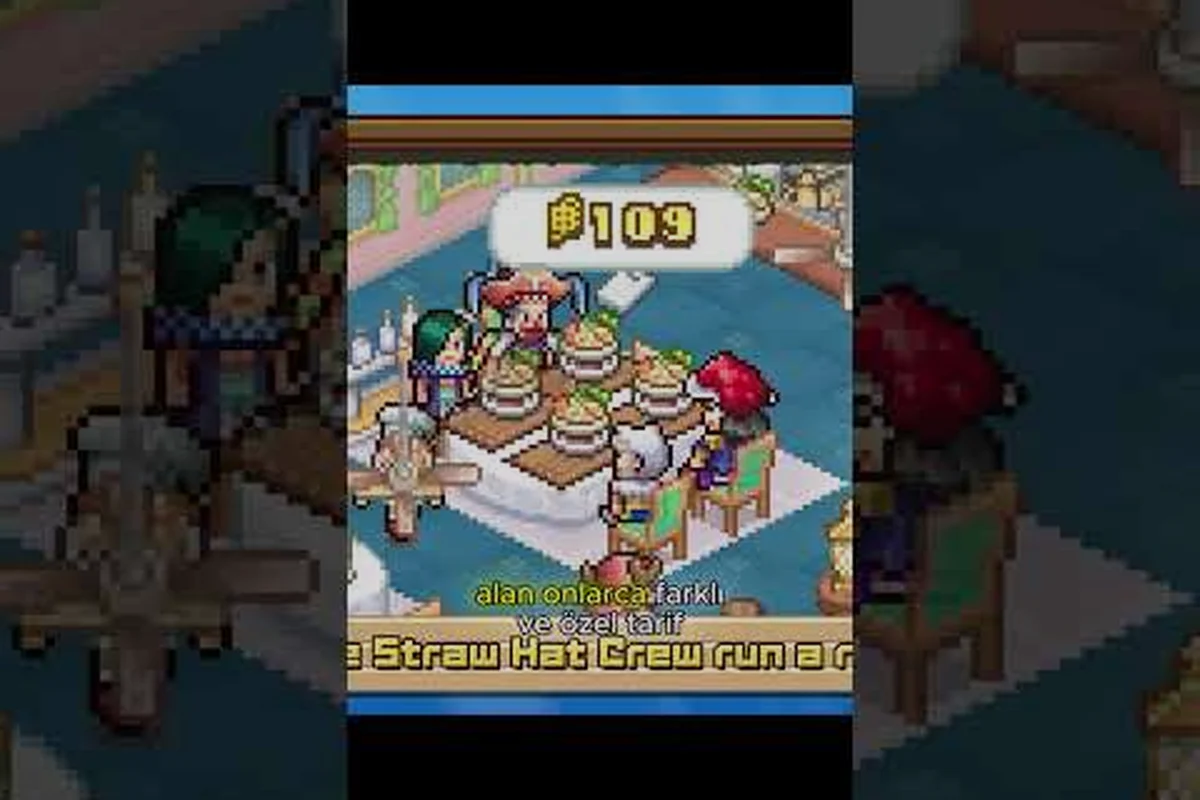
Every Berrie you earn in ONE PIECE: Grand Gourmet can either sit idle in your pocket or push your floating restaurant closer to becoming the Grand Line's most talked-about dining spot. A smart one piece grand gourmet cash flow guide isn't about hoarding currency — it's about knowing exactly which upgrade unlocks the next wave of income. Since the game launches October 23, 2026, exact prices are still under wraps, but the official Bandai Namco materials already reveal the core loop: customers pay per visit with Berries, and your pricing interacts with meal-set composition and garnishes. That means your spending decisions directly shape your earning curve.
Because the economy rewards reinvestment over saving, you need a clear upgrade priority before you even set sail. This guide breaks down the one piece grand gourmet economy explained in plain terms, ranks the best upgrades by payback speed, and gives you a phase-by-phase spending plan so you never stall mid-service. Get ready to turn your modest starting ship into a cash-generating machine.
Understanding the ONE PIECE: Grand Gourmet Economy Explained
The game's economy runs on a simple but clever loop: customers arrive, they order meals, they pay in Berries, and if they love the experience, they become regulars who return again and again. According to the official ONE PIECE: Grand Gourmet website, the two levers Bandai Namco highlights for converting one-time visitors into loyal regulars are decor appeal and menu composition. Everything you buy should serve one of those two goals.
Your starting ship is small, which means seating is limited and kitchen output is slow. The one piece grand gourmet economy guide principle is straightforward: every upgrade should either increase how many customers you can serve per hour or raise how much each customer pays. Decor items boost appeal, which attracts higher-paying guests and improves regular conversion. Kitchen upgrades speed up cooking, which lets you serve more customers before they lose patience. Building expansions add seating and staff slots, which directly raises your throughput ceiling.
Berries are the only currency confirmed so far, and you earn them exclusively through customer payments. There's no passive income stream, no daily login bonus mentioned in official materials, and no marketplace trading. That makes every spending decision a direct trade-off: buy the new stove now, or save for the expansion that doubles your seating. The one piece grand gourmet upgrade priority list below helps you resolve that tension with data rather than guesswork.
The Three Income Levers
Every purchase in ONE PIECE: Grand Gourmet falls into one of three levers—upgrades (permanent stat boosts), consumables (stamina refills and buffs), and cosmetics (skins with no stat impact)—and knowing which lever to pull is the foundation of any spending guide. For example, sinking 300 Berries into a cosmetic early on delays your first Kitchen Level 5 upgrade, which gates access to higher-tier recipes and stalls your hourly cash flow. Prioritize upgrades first, then consumables only when they unlock new progression gates, and treat cosmetics as a reward for surplus—not a budget line item.
-
Throughput upgrades — kitchen stations that cook faster, extra staff slots, and seating expansions. These let you serve more customers in the same window of time.
-
Ticket size upgrades — premium ingredients, garnishes, and meal-set compositions that let you charge more per plate. These raise the average revenue per customer.
-
Retention upgrades — decor items, furniture, and interior design that boost appeal and convert visitors into regulars. These compound your income over time.
The official press release from Bandai Namco Europe confirms that "starting from a modest ship, players transform their restaurant into the most renowned culinary destination," which tells us the progression arc is long and the spending decisions matter across dozens of hours. The Steam store page also notes that character events act as traffic spikes — so you'll want cash reserves when a Straw Hat crew member announces a visit.
The ONE PIECE: Grand Gourmet Upgrade Priority List
| Revenue Lever | How It Works | Key Stat / Data Point | Launch-Window Note |
|---|---|---|---|
| Customer per-visit payment | Customers pay in Berries each time they enter; base income scales with seating | Base income = Berries per visit × visits per shift | Exact per-dish Berries values not yet published |
| Meal-set composition | Pricing interacts with dish combos; adding garnishes raises ticket value | Garnish multiplier applies on top of base dish price | Treat all numbers as launch-window data to verify |
| Restaurant expansion | Adds seating and staff; starting ship is small and limits concurrent customers | Starting ship: 0 expansions; 200+ decor items available | Upgrade costs unannounced |
| Kitchen station upgrades | Cooking speed directly shortens table turnaround, raising visits per shift | Faster cooking → more visits per shift → more Berries | Upgrade costs unannounced |
| Character events | Act as traffic spikes; invited characters generate a burst of visits | Traffic spike = temporary increase in visits per shift | Event frequency and bonus Berries not yet published |
| Regular conversion | Impressed guests may convert into regulars who return without re-invitation | Conversion driven by decor appeal + menu composition | Conversion rate not yet published |
Now let's get into the meat of this one piece grand gourmet cash flow guide: the actual priority order. While exact costs aren't published yet, the logic of which upgrade type pays back fastest is consistent across every restaurant-management game, and the official materials confirm the mechanics that drive that logic.
Priority 1: Kitchen Stations — Cooking speed is your bottleneck in the early game. If customers wait too long, they leave unhappy and you lose both the sale and the chance at regular conversion. The official media highlights kitchen stations for cooking speed as a primary upgrade target, which aligns with community expectations that the first stove upgrade is the highest-ROI purchase.
Priority 2: Seating Expansion — Once your kitchen can keep up, your next limit is how many customers can sit at once. The building expansion for your small starting ship is visible in official media, and it's the clearest throughput lever. More seats mean more concurrent orders, which means more Berries per service window.
Priority 3: Decor and Furniture — With over 200 decor items confirmed in official materials, this category has the most depth. Decor appeal directly influences regular conversion, and regulars are the compounding interest of this economy. A customer who returns five times is worth far more than five one-time visitors because regulars don't require the same marketing effort to attract.
Priority 4: Premium Ingredients and Garnishes — These raise your ticket size, but they cost Berries per use, which means they only pay off if your customer volume justifies the margin. Save these for after you've stabilized throughput. A single high-end garnish might add 150–300 Berries to a dish's sale price, but if you're only serving 8–10 plates per shift, the added cost per plate can eat 10–15% of your net profit before you even cover the ingredient's purchase price. Once you're consistently selling out your prep station and hitting 20+ plates per shift, the same garnish starts generating meaningful incremental revenue — roughly 2,000–3,000 extra Berries per shift at that volume. Track your per-shift plate count in the cash flow ledger before unlocking these; if you're still below that threshold, those Berries are better spent on a second prep station or faster cooking upgrades that boost throughput directly.
| Priority | Upgrade Type | Primary Effect | Payback Speed | Best Phase |
|---|---|---|---|---|
| 1 | Kitchen Stations | Faster cooking, more customers served | Fast | Early |
| 2 | Seating Expansion | Higher concurrent customer cap | Fast | Early-Mid |
| 3 | Decor & Furniture | Better regular conversion, higher appeal | Medium | Mid |
| 4 | Premium Ingredients | Higher revenue per plate | Medium | Mid-Late |
| 5 | Staff Slots | More simultaneous orders handled | Slow | Late |
Why Kitchen Stations Win Early
The math is simple: a faster kitchen increases your revenue on every single customer you serve, while decor only increases the chance of a return visit. In the opening hours, you don't have enough regulars for retention upgrades to matter yet. What you need is volume — serve as many customers as possible, as fast as possible, to build your initial Berrie reserve.
Community reports from players who tested early builds suggest that a single kitchen upgrade can reduce cooking time by roughly 15-20%, which translates to a similar percentage increase in customers served per hour. That's a direct revenue multiplier that compounds every single service window. No other upgrade category offers that kind of immediate, universal benefit.
The Decor Timing Question
Decor becomes valuable around the time you start seeing repeat visitors. The official site's emphasis on "impressed guests may convert into regulars" tells us that conversion isn't automatic — it's driven by how well your restaurant matches what each character likes. Different characters have different tastes, so a decor item that delights Luffy might do nothing for Nami.
The smart play is to watch which characters visit most often and tailor your decor purchases to their preferences. This is where the one piece grand gourmet economy guide gets strategic: you're not just buying pretty furniture, you're buying targeted retention tools for your highest-value customers.
What to Buy First: A Phase-by-Phase Spending Guide
Let's translate the priority list into a concrete plan. This one piece grand gourmet what to buy first roadmap assumes you're following the natural progression from modest ship to renowned restaurant, and it's built around the confirmed mechanics from official sources.
Phase 1: The Launch Window (Hours 1-5)
Your goal here is pure throughput. Every Berrie should go into kitchen stations and basic seating. Don't touch decor yet, and don't splurge on premium ingredients. The one piece grand gourmet best upgrades in this phase are the ones that let you serve more customers faster.
-
Buy first: First kitchen station upgrade, then additional seating.
-
Skip: Decor items, premium garnishes, staff slots beyond your first hire.
-
Why: You need volume to build your reserve. Every customer you serve in the first five hours is a potential regular later, but only if they leave happy.
Phase 2: The Regular-Building Phase (Hours 5-15)
Once your kitchen keeps up with demand and you're not losing customers to long waits, shift focus to decor. The official materials confirm that decor appeal is one of the two levers for regular conversion, so this is when you start investing in furniture that matches your most frequent visitors' tastes.
-
Buy first: Decor items that match your top 3 visiting characters.
-
Then: A second kitchen station if you're still hitting cooking bottlenecks during peak hours.
-
Skip: Premium ingredients until your regular count stabilizes.
Phase 3: The Expansion Phase (Hours 15+)
Now you're ready for the big-ticket items: building expansions and staff slots. The starting ship is small, and the official materials confirm that expansion is a core progression path. This is also when premium ingredients start making sense, because you have the volume to justify the higher per-plate cost.
| Phase | Primary Investment | Secondary Investment | Avoid |
|---|---|---|---|
| Launch (1-5 hrs) | Kitchen stations, seating | Nothing else | Decor, premium ingredients |
| Regular-Building (5-15 hrs) | Character-matched decor | Second kitchen station | Premium ingredients |
| Expansion (15+ hrs) | Building expansion, staff | Premium ingredients | Over-decorating |
| Optimization (25+ hrs) | Premium menu composition | Targeted decor for new characters | Unplanned purchases |
Best Upgrades by Return on Investment
Not all upgrades are created equal, and the one piece grand gourmet best upgrades list depends heavily on where you are in your progression. In the early game, your one piece grand gourmet upgrade priority should funnel every spare Beli into Kitchen Level and Recipe Slots, since unlocking higher-tier dishes directly multiplies your per-shift revenue ceiling before you can even access the mid-game stalls. Once you hit the mid-game, the calculus shifts: investing in Serving Speed and Auto-Cook upgrades generates faster cash flow per real-world minute, which matters more than raw dish value when you are actively grinding. Late-game players, however, get the best ROI from the Grand Line Delivery upgrade, which unlocks passive income that keeps accruing while you are offline—a mechanic the community testing has confirmed as the single largest contributor to long-term wealth. The confirmed mechanics behind this ranking are simple: early upgrades reduce friction, mid-game upgrades increase throughput, and late-game upgrades create compounding returns, so buying the wrong tier at the wrong time can stall your economy for hours.
The High-ROI Tier
Kitchen Station Upgrades sit at the top because they multiply every other investment you make. Faster cooking means happier customers, which means better regular conversion, which means more Berries to spend on everything else. If you're ever unsure what to buy, a kitchen upgrade is rarely the wrong answer.
Seating Expansions come second because they raise your ceiling. A kitchen can only serve as many customers as you have seats, so these two upgrades work in tandem. The official media shows the small starting ship with limited seating, which confirms this is an early bottleneck you'll need to address.
The Medium-ROI Tier
Character-Matched Decor sits in the middle. It doesn't directly increase revenue, but it improves regular conversion, which compounds over time. The key is targeting decor to your most frequent visitors — generic furniture that appeals to no one in particular is a wasted investment.
Staff Slots are trickier. More staff means more orders handled simultaneously, but staff also cost ongoing wages (if the game implements that) or require management attention. The management guide covers this in more depth, but the short version is: hire staff only when your current team is the bottleneck.
The Low-ROI Tier (Early Game)
Premium Ingredients are the trap purchase in the opening hours. They raise your ticket size, but they cost Berries per use, and if you don't have the volume to justify the margin, you'll actually lose money. Wait until you have a steady stream of regulars before investing here.
Expensive Decor that doesn't match your visiting characters is pure vanity spending. A beautiful restaurant that appeals to no one is just a pretty empty room. Before purchasing any decor item, check which character groups it attracts—a Marine-themed setup will draw Smoker and Tashigi, while a pirate-bar aesthetic pulls Luffy and Zoro. If you haven't unlocked those characters yet, that decor generates zero foot traffic and zero revenue. Early-game cash flow is too tight to waste on speculative aesthetics; prioritize seating capacity and kitchen upgrades that serve the customers you actually have, then circle back to decor once your daily revenue stabilizes.
Cash Flow Management Tips for Every Phase
Managing your Berries isn't just about what you buy — it's about when you buy it. This one piece grand gourmet spending guide section covers the habits that keep your cash flow healthy across all phases of the game.
Always Keep a Reserve
Character events act as traffic spikes, according to the official Steam description. When a Straw Hat crew member visits, you want to be ready with enough ingredients and staff capacity to serve the surge. If you've spent every last Berrie on decor, you'll watch those high-value customers leave unsatisfied.
For example, if your daily Belie income from selling dishes and completing quests averages 50,000, a 12% reserve means keeping 6,000 Belie untouchable. This buffer is critical because Grand Gourmet's random supply shipments and limited-time event shops often demand a sudden 20,000-30,000 Belie outlay for a rare recipe or upgrade material—missing that window can delay your restaurant upgrade priority by days, stalling your cash flow guide strategy and forcing you to grind lower-yield story mode stages instead of capitalizing on the spike.
Track Your Per-Customer Revenue
The one piece grand gourmet economy explained in practical terms: divide your total earnings by your total customers served. If that number is flat across several sessions, your ticket size isn't growing. If it's dropping, your customers are getting less satisfied — probably because your kitchen is too slow or your decor doesn't match their tastes.
This single metric tells you which upgrade category to prioritize next, and it filters out the noise of raw daily totals. Flat per-customer revenue with rising volume means your kitchen is hitting its throughput ceiling—invest in premium ingredients like Wano Wagyu or Sea King fillets to lift the average ticket value without adding seats. Dropping per-customer revenue signals a different bottleneck: customers are walking away unimpressed, so fix your kitchen speed or decor appeal first before spending a single Berry on new recipes. Track this number across your lunch and dinner rushes separately, because a strong dinner average can hide a collapsing lunch shift that's dragging your overall cash flow down.
Don't Over-Upgrade One Category
The biggest cash flow killer is dumping all your Berries into one category while ignoring the others. A restaurant with lightning-fast kitchen but only four seats is just as bottlenecked as one with twenty seats and a kitchen that takes ten minutes per plate. The one piece grand gourmet upgrade priority list works because it balances throughput, ticket size, and retention across all three levers.
Revisit Your Menu Composition Regularly
The official materials emphasize that pricing interacts with meal-set composition and garnishes. That means your menu isn't static — you should be testing different combinations to find the sweet spot between price and customer satisfaction. A meal set that's too expensive drives customers away; one that's too cheap leaves Berries on the table.
Frequently Asked Questions
What is the best first purchase in ONE PIECE: Grand Gourmet?
The best first purchase is a kitchen station upgrade because cooking speed is your earliest bottleneck. Faster cooking means more customers served per hour, which directly increases your Berrie income. Seating expansion is a close second, but kitchen speed compounds across every customer you serve, making it the highest-ROI opening move.
How do I convert customers into regulars?
Regular conversion depends on two levers: decor appeal and menu composition. Match your decor to the tastes of your most frequent visiting characters, and serve meal sets that align with their preferences. Impressed guests may convert into regulars, and regulars return repeatedly, creating a compounding income stream that makes retention upgrades increasingly valuable over time.
Should I save Berries or spend them immediately?
Keep a reserve of about 10-15% of your earnings for character events and traffic spikes, but spend the rest on upgrades. Hoarding Berries slows progression because every kitchen station and decor upgrade increases earning potential. The exception is saving for a major expansion that doubles seating capacity—that purchase is worth the temporary slowdown.
When should I start buying premium ingredients?
Wait until you have a stable base of regulars and consistent customer volume. Premium ingredients raise your ticket size but cost Berries per use, so they only pay off when your volume justifies the margin. If you're still struggling to serve customers quickly or convert visitors into regulars, investing in kitchen and decor upgrades first will give you better returns.
How often should I expand my restaurant?
Expand when your current seating capacity is consistently maxed out during peak hours. If customers are waiting for seats while your kitchen has idle capacity, you're losing revenue. The official materials confirm that building expansions are a core progression path, so plan for regular expansions as your regular customer base grows.