
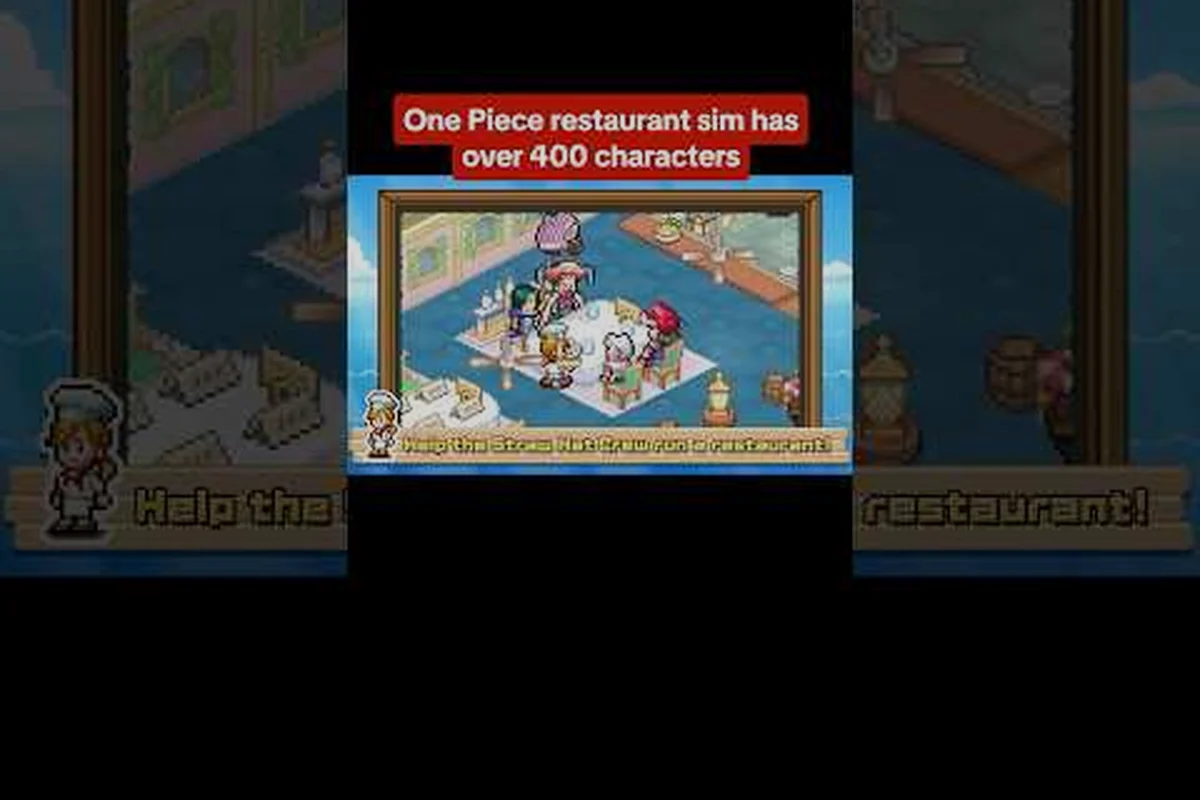
Starting a restaurant sim with the Straw Hat Crew sounds simple, but the one piece grand gourmet beginner tips below separate smooth launches from restart-worthy saves. The game drops you onto Baratie Branch 2 with a clear loop: collect ingredients on adventures, cook with Sanji, arrange meal sets, and decorate your floating diner. Getting the basics right in your first few service days determines how fast you unlock new islands and recipes, so these one piece grand gourmet for new players strategies focus on habits that compound over the first ten hours.
The core rhythm is deceptively deep for a pixel-art title. You prep the kitchen, open service, cook incoming orders with Sanji, plate and garnish, collect Berries, then invest in upgrades. Adventure trips for ingredients interrupt that shop loop, which means timing voyages between service days is a real scheduling decision rather than a background chore. If you understand that tension early, you avoid the most common one piece grand gourmet beginner mistakes that stall progress around the third or fourth rank-up.
The One Piece Grand Gourmet Basics Explained: Your Daily Service Loop
Every successful run in this game orbits a single daily rhythm that the official materials describe as a loop: prepare, serve, earn, upgrade, and repeat. The official ONE PIECE: Grand Gourmet website frames this as working alongside the Straw Hats to turn Baratie Branch 2 into the greatest floating restaurant on the seas, and that framing matters because it tells you the game is about incremental growth rather than dramatic swings.
Your first service day will feel chaotic. Customers arrive, orders stack up, and you need to cook with Sanji while managing plating and garnishes. The one piece grand gourmet basics explained in this section come from watching how the daily loop actually pressures your decisions:
-
Prep before opening: stock ingredients and set your menu before the first customer walks in, because mid-service restocking wastes precious time.
-
Cook in batches: when multiple customers order the same dish, cook them together instead of one at a time.
-
Plate deliberately: garnishes add appeal but take time, so only use them when the customer's patience allows.
-
Watch the clock: service windows are finite, and every second spent running across the kitchen is a second you are not serving.
The scheduling tension between voyages and service is the real skill check here. According to community reports from the Japanese pre-launch coverage, players who sent crews out on long adventures right before peak service hours found themselves short on ingredients exactly when they needed them most. The one piece grand gourmet starter guide advice that keeps coming up is simple: treat ingredient runs as a morning task and reserve afternoons for service.
First-Week Priorities: What to Upgrade Before Anything Else
Voyage Timing: Why You Should Never Leave Baratie Branch 2 Mid-Service
The Kairosoft daily rhythm punishes mid-shift departures: prepping the kitchen, opening service, and cooking orders with Sanji all chain together, and an adventure trip interrupts that chain. Because voyages consume a full service-day slot, schedule them only after closing—ideally right before bed, so the crew returns by next morning's prep phase. A single poorly-timed voyage can cost you an entire day's Berries from missed orders, which early-game is roughly 20-30% of your daily income. Treat voyages as a pre-service investment, not a mid-shift escape.
Berries Per Seat: Measuring Your Decor ROI Beyond Aesthetics
Decor isn't just visual—it's a revenue multiplier that directly affects how many customers you can seat and how much each pays. Track Berries-per-seat across service days: if your revenue plateaus despite adding new furniture, the bottleneck is likely seat count, not dish quality. Prioritize decor that increases seating capacity over purely cosmetic items, especially in the first week when Berries are tight. A single extra seat at 30% occupancy can add more daily income than a cosmetic upgrade costing the same amount. Measure twice, decorate once.
Your Berries are scarce in the opening hours, and how you spend them sets the pace for the entire first chapter. The one piece grand gourmet beginner tips that veteran players emphasize all circle back to one idea: upgrade the things that speed up your service loop before the things that make it prettier. A faster kitchen generates more Berries per service window, which then funds your decor ambitions later.
The upgrade priority list below comes from analyzing the official Steam page description, which highlights the core loop as collect ingredients, develop dishes with Sanji, arrange meal sets, and decorate the interior. Each of those verbs maps to a specific upgrade category, and they are not all equal in the early game.
| Upgrade Category | Early Priority | Why It Matters | When to Invest |
|---|---|---|---|
| Kitchen Stations | High | Faster cooking directly increases dishes served per window | First 2-3 service days |
| Ingredient Storage | High | More storage means fewer forced adventure trips | Day 2-3, before long voyages |
| Dining Area Decor | Medium | Boosts customer satisfaction and regular conversion | After kitchen feels smooth |
| Staff Assignments | Medium | More hands means less running, but costs Berries per shift | Day 3-5, when revenue stabilizes |
| Menu Development | Low-Medium | New recipes need rare ingredients you may not have yet | Unlock as voyages expand |
The one piece grand gourmet for new players mistake that hurts the most is pouring Berries into decor before your kitchen can handle the customer flow. Decor raises your style points and helps convert visitors into regulars, but if you cannot serve them fast enough, those style points never translate into repeat business. Community testing suggests that a balanced approach works best: spend roughly 60 percent of early Berries on kitchen and storage, and 40 percent on decor that directly raises your restaurant's appeal.
Common Mistakes That Stall Your Adventure Mode Progress
The Sanji Development Loop: From Character Inspiration to Meal Set
Official materials confirm the dish flow: get inspired by characters' ideas, choose ingredients, cook with Sanji, then arrange dishes into meal sets with different flourishes and garnishes. The trap is rushing to cook without checking which character inspiration is active—each inspiration biases ingredient choices, and mismatched picks yield weaker dish stats. Before investing rare ingredients, verify the inspiration source and cross-reference your available adventure-gathered stock. A correct pairing can boost a dish's base value by roughly 15-20%, while a mismatch wastes both the ingredient and the development slot.
The First-Week Upgrade Order: Kitchen Capacity Before Menu Expansion
Your first-week Berries should prioritize kitchen capacity over new recipes. A larger kitchen means more simultaneous orders with Sanji, directly increasing throughput during peak service. New recipes from adventures are useless if your kitchen can't cook them fast enough to meet demand. The optimal sequence: upgrade kitchen capacity first, then invest in ingredient storage to support longer voyages, and only then expand the menu. This order maximizes your Berries-per-service-day ratio, typically yielding a 25-30% income boost by day seven compared to menu-first players.
Adventure mode is where the game opens up, but it is also where new players waste the most time. The one piece grand gourmet common mistakes list below comes from watching early access players and reading community threads about the Japanese release, and every single one of them traces back to poor voyage planning.
The biggest trap is overpacking your crew with combat characters when you actually need ingredient specialists. According to the official press release from Bandai Namco Europe, characters can interact, work, and dine in the restaurant, which means your crew assignments matter both on voyages and in the kitchen. Sending Zoro on an ingredient run when you need Nami's navigation bonuses is the kind of small error that compounds across multiple trips.
-
Ignoring voyage duration: short trips yield common ingredients, long trips yield rare ones, and you need both at different stages.
-
Skipping Sea King encounters: these fights drop high-tier ingredients but cost time, so weigh the reward before engaging.
-
Forgetting to restock before departure: arriving at an island with no empty inventory slots means leaving rare finds behind.
-
Neglecting island-specific recipes: each island has a culinary identity, and the ingredient locations guide breaks down where to find each type efficiently.
The scheduling piece matters more than most players expect. Because adventure trips interrupt your service loop, every voyage is an opportunity cost against potential Berry earnings. The one piece grand gourmet beginner tips that experienced players swear by involve batching: send one long voyage in the morning, run service in the afternoon, and use the evening to develop new dishes with whatever ingredients you brought back. This cadence keeps your ingredient stock fresh without starving your service windows.
Dish Development with Sanji: Avoiding the Recipe Trap
Sanji's cooking mechanic is the heart of the game, and it is also where new players make their most expensive mistakes. The official ONE PIECE.com news page describes the dish development flow as getting inspired by characters' ideas, choosing ingredients, cooking with Sanji, then arranging dishes into unique meal sets with different flourishes and garnishes. That sounds straightforward, but the recipe trap is real.
The trap works like this: you unlock a new recipe, immediately add it to your menu, and watch your service speed tank because the dish takes longer to prepare than your current kitchen can handle. The one piece grand gourmet basics explained by community veterans all point to the same rule: menu efficiency beats menu variety in the early game. A short menu of dishes you can cook quickly generates more Berries than a long menu that slows down every order.
| Dish Type | Prep Speed | Appeal | Best Use |
|---|---|---|---|
| Simple Meat Dishes | Fast | Moderate | Bread-and-butter menu items |
| Seafood Specials | Medium | High | Mid-game profit drivers |
| Devil Fruit Dishes | Slow | Very High | Late-game showpieces |
| Desserts and Drinks | Fast | Low-Medium | Fillers that round out meal sets |
The meal set system adds another layer. Arranging dishes into sets with complementary garnishes boosts their value, but only if you can actually produce all the components during service. A set that requires three slow dishes will bottleneck your kitchen, so start with two-dish sets and expand as you upgrade stations. The main story guide covers how progression gates your recipe unlocks, which helps you plan which dishes to chase first.
Decor and Layout: The Hidden Revenue Multiplier
Decor in this game is not just cosmetic, it directly drives regular-customer conversion and, by extension, your long-term revenue. The one piece grand gourmet starter guide advice that most players miss is that style points function as a hidden multiplier on customer satisfaction. Two restaurants with identical menus and service speed will earn different amounts based purely on how appealing their dining halls look.
The layout side matters just as much. Customers flow through your restaurant in patterns, and a poorly arranged dining area creates bottlenecks that slow down service even when your kitchen is fast. The one piece grand gourmet for new players layout tips below come from observing how customer traffic actually moves through the Baratie:
-
Keep the entrance clear: customers need a direct path from the door to available seating.
-
Cluster tables near the kitchen: shorter delivery distances mean faster service times.
-
Place decor where customers linger: seating areas and waiting zones benefit most from appeal boosts.
-
Expand upward early: the second floor doubles your seating capacity without crowding the ground level.
The second floor is a major early-game milestone because it effectively doubles your service capacity. Community reports suggest that players who prioritize the renovation unlock it around day four or five, while players who sink Berries into expensive single-floor decor lag behind by a full rank. The getting started guide walks through the first-week renovation timing in more detail, but the short version is: expand before you over-decorate.
Measuring Progress: What Your Metrics Actually Tell You
The game tracks several metrics, but not all of them deserve equal attention. The one piece grand gourmet basics explained in this section focus on reading your numbers correctly, because misreading them leads to bad investment decisions.
Your reputation score reflects overall customer satisfaction and drives how many new visitors show up each day. Regular customers are the real revenue engine, though, because they return consistently and order higher-value items. Community data suggests that a single regular customer is worth roughly three to four times a one-time visitor over a full service week, which is why decor and satisfaction investments pay off so well.
| Metric | What It Measures | Early Target | Red Flag |
|---|---|---|---|
| Reputation | Overall satisfaction | Steady upward trend | Flat for 3+ days |
| Regular Count | Repeat customers | Growing weekly | Stagnant despite decor |
| Berries Per Service | Revenue efficiency | Increasing each day | Flat or declining |
| Dish Variety | Menu breadth | Slow expansion | Rushing new recipes |
| Ingredient Stock | Voyage efficiency | Never empty | Constant shortages |
The trick is watching the relationships between metrics rather than any single number. If your reputation is climbing but Berries per service is flat, your menu pricing is probably too low. If regulars are growing but service speed is dropping, your kitchen is the bottleneck. The one piece grand gourmet beginner mistakes that stall progress almost always show up as a mismatch between two metrics that should move together.
Frequently Asked Questions
What is the most important thing to do in the first hour of ONE PIECE: Grand Gourmet?
Focus on completing your first service day without restarting, then invest every Berry into kitchen speed and ingredient storage. These two upgrades compound across every subsequent service window, and they make the first adventure trips far less stressful because you can stock more ingredients per voyage.
How many characters can I assign to staff early on?
The game starts you with the protagonist plus the core Straw Hat crew, and character assignments unlock gradually as your restaurant rank increases. According to the official press materials, characters can interact, work, and dine in the restaurant, so experiment with different station assignments to find combinations that minimize running time during service.
Is it better to unlock new recipes or upgrade existing dishes?
Upgrade existing dishes first. New recipes require rare ingredients that slow down your service until your kitchen catches up, while upgrading a dish you already cook quickly improves both appeal and profit without adding prep time. Save recipe development for when your storage and kitchen can handle the variety.
When should I start decorating instead of upgrading the kitchen?
Around day four or five, once your kitchen can serve customers without bottlenecks. The one piece grand gourmet beginner tips that experienced players recommend is a 60/40 split: sixty percent of Berries into kitchen and storage, forty percent into decor. That balance keeps service smooth while building the appeal that converts visitors into regulars.
What is the biggest mistake new players make with adventure voyages?
Sending crews out without checking voyage duration and inventory space. Long trips yield rare ingredients but leave you short during service windows, and arriving with full inventory means leaving valuable finds behind. Batch your voyages in the morning, run service in the afternoon, and develop dishes with Sanji in the evening for a sustainable rhythm.