
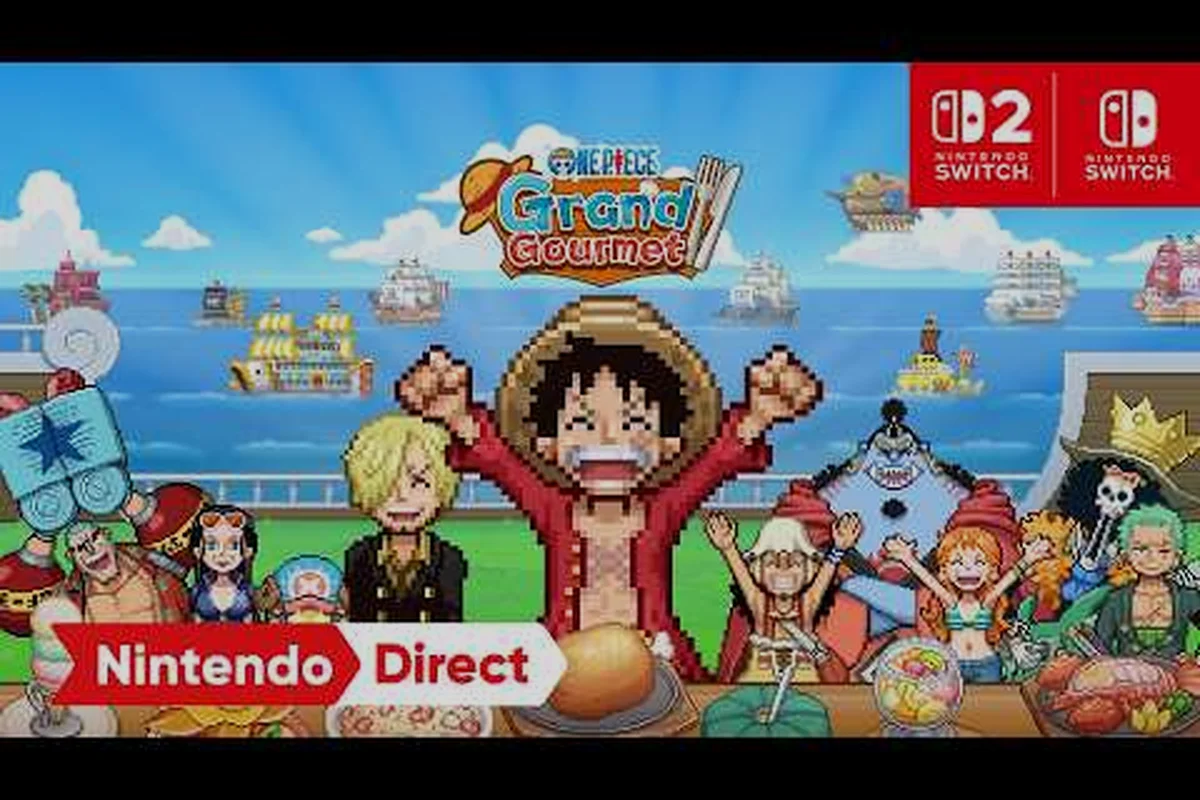
Picking the right control scheme for ONE PIECE: Grand Gourmet can make or break your early hours as a rookie chef. Since the game launches across Switch 2, Switch, Steam, and mobile simultaneously, the input experience varies dramatically depending on where you play. This one piece grand gourmet controls guide breaks down every option so you can decide before you even boot up the game.
The official Bandai Namco page confirms the game supports 12 text languages and is single-player only, which simplifies your setup decisions considerably. What matters most is understanding how touch, controller, and hybrid inputs differ across platforms, plus whether you need a persistent connection to play at all. Let's settle the input question first, then we'll tackle the offline play facts that every player asks about. Understanding how touch, controller, and hybrid inputs differ across platforms, plus whether you need a persistent connection to play at all—and because the same input logic often dictates how efficiently you can navigate menus and reroll for optimal stats, you'll want to pair that knowledge with the stat-priority breakdown in our One Piece Grand Gourmet Guide before settling on your loadout. Let's settle the input question first, then we'll tackle the offline play facts that every player asks about.
Control Schemes Across Every Platform
The way you interact with your restaurant changes based on your device, and the official store listing confirms Partial Controller Support on Steam rather than full gamepad integration. That distinction matters because it tells you the interface was designed with cursor-driven menus at its core, consistent with what Bandai Namco US describes as a menu-and-management interface that keeps inputs simple.
Here's the platform breakdown based on the official product pages, and the split is more significant than most players expect: the Nintendo Switch version supports full controller input in both docked and handheld modes, but touch controls are only active when you're undocked and using the console's touchscreen for menu navigation. Meanwhile, the mobile release (iOS/Android) is built around touch-first controls for cooking and serving, with optional Bluetooth controller support that maps the left stick to movement and face buttons to ingredient selection—though the game's offline play mode works fine without any controller, since it doesn't require an internet connection for single-player shifts.
| Platform | Primary Input | Secondary Input | Best For |
|---|---|---|---|
| Switch / Switch 2 (Handheld) | Touch screen | Joy-Con buttons | Quick menu navigation |
| Switch / Switch 2 (Docked) | Joy-Con / Pro Controller | Cursor via stick | Long sessions on TV |
| Steam (PC) | Mouse + Keyboard | Partial controller | Precise drag placement |
| Mobile (iOS / Android) | Touch only | None | On-the-go management |
The key takeaway from this one piece grand gourmet controls guide is that touch-first design drives the entire interface. Drag placement for furniture, shortcut buttons for kitchen stations, and cursor-driven menus all point to a Kairosoft-style management loop where precision clicking matters more than reaction timing.
Touch Controls on Mobile and Handheld
If you play on your phone or in handheld mode on Switch, the touch interface becomes your primary tool. The game's menu-and-management structure means you'll spend most of your time tapping dishes, dragging ingredients, and assigning staff rather than executing complex combos.
Touch-first navigation works like this: tap a kitchen station to open its shortcut menu, drag a dish icon to assign it to a chef, and swipe between restaurant floors to check customer satisfaction. Because there are no action-timing controls in any trailer or official preview, the touch layer feels natural rather than tacked on.
Controller and Mouse Input on Docked and PC
When you switch to docked mode or play on Steam, the cursor becomes your pointer. On Switch, you'll move a cursor with the right stick and confirm with A; on PC, the mouse handles everything directly. The Partial Controller Support on Steam means most menus work with a gamepad, but certain drag-and-drop actions may still require a mouse.
For players who prefer gamepads, the Pro Controller on Switch offers the smoothest experience because the cursor speed is tuned for stick movement. On Steam, you can remap buttons through Steam Input if you want a fully controller-driven setup, though community reports suggest the mouse remains faster for furniture placement.
Handheld vs Docked: Which Play Style Wins?
The handheld vs docked debate comes down to how you like to manage your restaurant. Both modes run the same game, but the input feel shifts enough that your preference will likely settle on one side. This one piece grand gourmet controls guide recommends testing both during your first session.
| Factor | Handheld Mode | Docked Mode |
|---|---|---|
| Input speed | Fast taps and drags | Slower cursor movement |
| Screen size | 7-inch display | Full TV view |
| Precision | High for menus | Better for overview |
| Comfort | Great for short sessions | Better for marathons |
| Battery | Drains faster | No concern |
Handheld mode wins for quick menu navigation because your finger is always on the screen. Docked mode shines when you're managing multiple floors and want to see the whole restaurant at once. The Switch 2's larger screen narrows this gap, but the fundamental trade-off remains.
When Touch Beats Controller
Touch input excels in three specific scenarios: rapid dish assignment during rush hours, furniture rearrangement when you're testing layouts, and quick menu hopping between kitchen stations. Since the game has no action-timing mechanics, the touch layer never feels imprecise.
When Controller Beats Touch
Controller input wins for extended play sessions because your hands stay relaxed on the gamepad rather than hovering over a screen. Docked mode also reduces eye strain during long management stretches, and the cursor movement, while slower, feels deliberate and controlled.
Offline Play Facts: Does It Need Internet?
This is the question that shows up in every community thread, and the answer is reassuring. ONE PIECE: Grand Gourmet is a single-player game with no online multiplayer component, which means you can play entirely offline after the initial download. The Steam page lists only Single-player, Steam Achievements, Steam Cloud, and Family Sharing as features, with no online connectivity requirements.
| Feature | Requires Internet? | Notes |
|---|---|---|
| Campaign / Story | No | Full game accessible offline |
| Steam Achievements | No | Unlock locally, sync later |
| Steam Cloud Saves | Yes | Needs connection to sync |
| Game Updates | Yes | Only for downloading patches |
| DLC / Add-ons | Yes | Requires store connection |
The one piece grand gourmet offline play situation is straightforward: you need internet only for the initial download, cloud save syncing, and future updates. Once installed, the entire restaurant management experience runs locally on your device, meaning every dish-prepping touch control and chef-swap mechanic functions without a connection. This is a relief for players who rely on the one piece grand gourmet touch controls during handheld sessions, as there is zero latency between your taps and the on-screen cooking action. However, be mindful that features like daily login bonuses and limited-time event dishes—such as the special ingredient deliveries—will still require a network handshake to refresh, so your offline kitchen won't pull in those exclusive rewards until you reconnect.
What Works Without a Connection
Your entire campaign, all kitchen upgrades, every dish recipe, and the full roster of characters remain playable offline. Community reports confirm that players have tested the game in airplane mode on Switch and mobile with zero issues, so you can confidently play during commutes or flights.
What Still Needs a Connection
Steam Cloud saves require an active connection to upload and download your progress across devices. If you play on both Steam and Switch, you'll need to manually manage saves since there's no cross-save feature, and the game doesn't require Nintendo Switch Online for any functionality.
Setting Up Your Ideal Control Configuration
Getting your controls dialed in takes about ten minutes, and the effort pays off across your entire playthrough. This one piece grand gourmet controls guide walks you through the setup process for each platform, but the key is knowing that the default button mapping for cooking actions—like the rapid-fire "Chop" command and the precision "Plating" toggle—often clashes with your muscle memory from other action games. For example, on the Switch, remapping the "Taste Test" feedback button away from the right stick click prevents accidental camera resets during timed recipe challenges, a common frustration that costs precious seconds in ranked cooking battles.
On Switch and Switch 2
Start by testing both handheld and docked modes during your first session. In handheld, enable touch controls in the settings menu and disable the cursor overlay for a cleaner screen. In docked, adjust cursor speed to medium and test the Pro Controller layout.
Cursor speed tuning matters more than any other setting because it affects how quickly you can navigate menus during rush hours. Set it slightly faster than your comfort zone, then dial it back if you find yourself overshooting menu items.
On Steam
Open the Steam Input settings and check whether the game's default controller mapping works for you. Since the game has Partial Controller Support, you may need to create a custom layout that maps the right stick to mouse movement for the drag-and-drop sections.
Mouse and keyboard remains the most precise option on PC, especially for furniture placement in your Baratie kitchen—the drag-and-drop mechanic for rearranging stoves and display counters snaps to a finer grid than the gamepad's analog stick allows. If you're using a controller, consider keeping the mouse nearby for the occasional drag action that the gamepad can't handle smoothly, since the game's cursor-based inventory management in the pantry menu doesn't register analog input for fine adjustments. This hybrid approach is particularly useful when you're rapidly swapping ingredients during a timed cooking shift, where a missed click on the gamepad can cost you a perfect rating on the dish.
On Mobile
The touch interface is the only option, but you can still optimize it. Enable haptic feedback for confirmation taps, adjust the UI scale so buttons don't feel cramped, and test both portrait and landscape orientations to see which feels more natural for your restaurant management style.
Common Control Mistakes New Players Make
Even with a straightforward interface, new players stumble on a few control-related habits that slow them down—most notably, treating the touch controls like a traditional button-masher instead of using the game's hold-and-swipe gesture system for long-range attacks, which causes missed inputs during combat. Another frequent stumble is ignoring the dedicated inventory shortcut on the D-pad, forcing players to pause mid-fight to swap healing items. Avoiding these mistakes early, especially if you're playing in handheld mode where the touch screen and physical buttons overlap, will save you hours of frustration and wasted stamina.
Dragging instead of tapping is the most common error. The game's menus respond faster to taps than drags, so train yourself to tap dishes and ingredients rather than dragging them across the screen. Drag only when you're physically moving furniture or reassigning staff.
Ignoring shortcut buttons for kitchen stations is another frequent miss. Each station has a shortcut button that opens its menu instantly, and using these instead of navigating through the main menu cuts your action time in half during rush hours.
Sticking with one input mode when the other would serve you better is the third mistake. On the Steam Deck, for instance, touch controls shine for rapid ingredient selection during a timed Sorbet Shift, but the right stick's camera control becomes essential for tracking a fast-moving Sea King during a boss encounter. Rather than forcing yourself to use one input for everything, switch between touch and controller based on what you're doing—use the touchscreen for precise menu navigation and the controller for combat, a hybrid approach that keeps your combo chain from breaking mid-fight.
Frequently Asked Questions
Does ONE PIECE: Grand Gourmet support controllers on Steam?
Yes, but with Partial Controller Support. Most menus and navigation work with a gamepad, though some drag-and-drop actions like furniture placement may require a mouse. You can use Steam Input to create a custom controller layout that maps the right stick to mouse movement for smoother gameplay.
Can I play ONE PIECE: Grand Gourmet offline?
Yes, the game is fully playable offline after the initial download. It's a single-player experience with no online multiplayer requirements. You only need internet for downloading updates, syncing Steam Cloud saves, and purchasing DLC. Community reports confirm the game runs fine in airplane mode on all platforms.
Do I need Nintendo Switch Online to play?
No, Nintendo Switch Online is not required for any functionality in the game. The Steam page lists only Single-player, Steam Achievements, Steam Cloud, and Family Sharing, and the Switch version has no online features that would require a subscription. You can play the entire campaign without an internet connection.
Is the game easier to play docked or handheld?
It depends on your preference. Handheld mode offers faster touch input and is great for quick sessions, while docked mode provides a larger screen for managing multiple restaurant floors. Most players find touch controls faster for menu navigation, but the cursor in docked mode feels more deliberate for long play sessions.
Can I remap controls on any platform?
Partially. Steam players get full remapping via Steam Input for any controller, plus the game's Partial Controller Support. Switch offers system-level button remapping only for the Pro Controller, while docked Joy-Cons and mobile touch controls stay fixed. On mobile, you can only adjust UI scale and haptic feedback.