
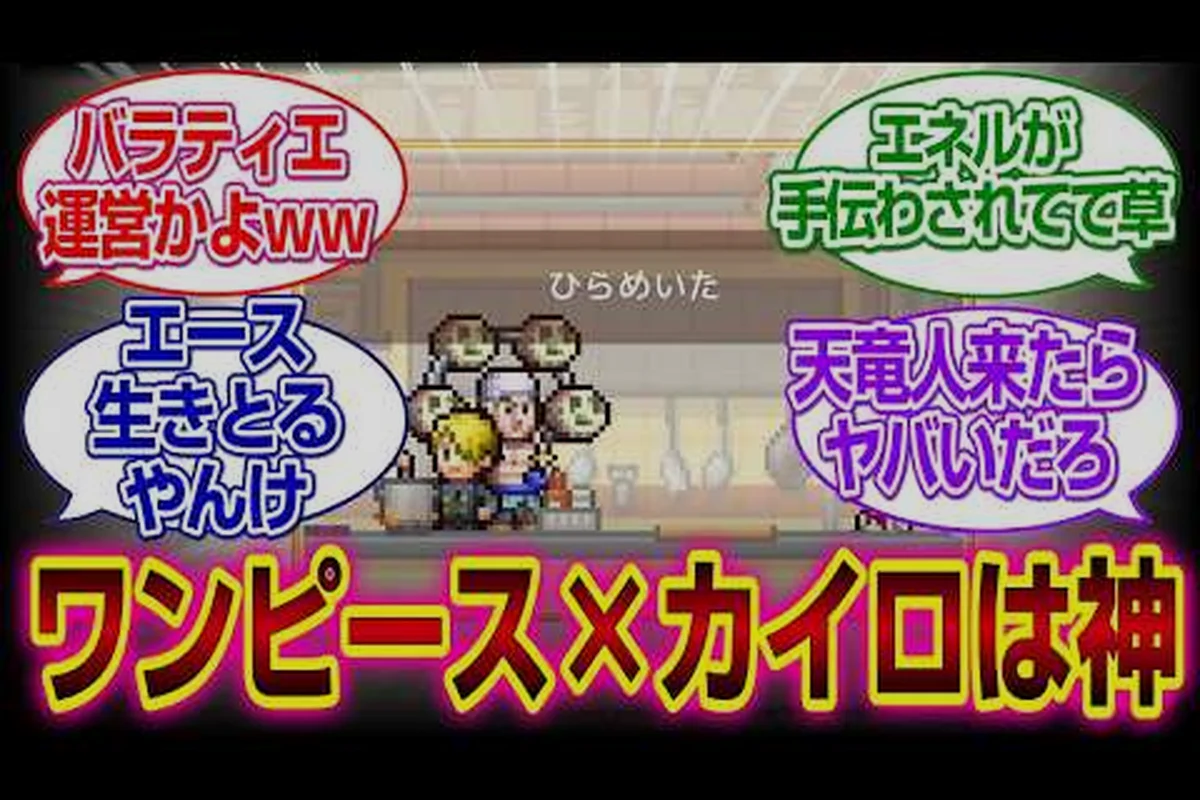
ONE PIECE: Grand Gourmet hides more than just recipes in its pixel-art kitchen. From manga callbacks in character dialogue to subtle nods in restaurant decor, the game rewards players who know the source material. These one piece grand gourmet hidden references turn routine management into a treasure hunt for longtime fans, and spotting them early can even shape how you approach your first week on the Baratie II.
The game's original story, supervised under the ONE PIECE license, features the Straw Hat Crew alongside Baratie legacy characters Patty and Carne from the manga's Baratie arc. According to the official story page, Zeff's restaurant heritage anchors the entire premise. That foundation means the developers had plenty of source material to draw from when crafting fan service moments, and they clearly took advantage of it. Here's what to watch for as you build your floating restaurant.
Cutscene Callbacks and Fan Service Moments in the Story
Patty and Carne's Baratie Legacy as Reference Anchors
The inclusion of Patty and Carne—the original Baratie head chefs from the manga's Baratie Arc—serves as the game's primary canon anchor. Unlike generic restaurant sims, Grand Gourmet's story is "supervised under the ONE PIECE license," meaning these characters' dialogue and cooking philosophies are officially vetted. Their presence bridges Zeff's restaurant heritage directly into the game's premise, giving players a tangible link to Chapter 43-44's kitchen hierarchy where Patty's "frying" expertise and Carne's "meat preparation" defined the Baratie's menu structure. This legacy framing makes their in-game interactions a deliberate reference point for manga readers.
Text Language Coverage: Twelve-Language Reference Accessibility
Grand Gourmet ships with 12 text languages: Japanese, English, French, Italian, German, Spanish, Neutral Spanish, Brazilian Portuguese, Simplified Chinese, Traditional Chinese, Korean, and Thai. This localized approach ensures manga-specific references—like puns on dish names or Baratie Arc terminology—remain accessible across regions. Notably, the inclusion of both Spanish and Neutral Spanish variants suggests distinct translation teams handled European and Latin American audiences, which could affect how regional One Piece terminology (e.g., "Zoro" vs. "Zolo") appears in reference-heavy dialogue. Players switching languages may discover that certain hidden references only fully land in Japanese, the source language.
The story mode delivers its narrative through character events and story cutscenes that unfold as you progress through restaurant ranks. While ONE PIECE: Grand Gourmet cutscenes are presented in a visual novel style with character portraits and dialogue boxes, the writing carries genuine weight for series fans. The game leans into the Baratie arc's legacy, and players who remember the original manga will find themselves grinning at familiar beats.
Patty and Carne appear as staff members, and their banter reflects their dynamic from the Baratie arc. Patty's obsession with his own cooking skills and Carne's more laid-back approach to kitchen work both shine through in event dialogue. The game doesn't just copy their personalities, though. It expands them, showing how they've grown under Zeff's mentorship while still maintaining their competitive edge.
Zeff's backstory gets meaningful screen time in the story cutscenes. His history as a pirate captain who sacrificed his leg to save a young Sanji is referenced through dialogue and context clues, though the game wisely avoids rehashing the full flashback. Instead, players get glimpses of how that history shaped his cooking philosophy and his approach to running a restaurant. It's a smart way to honor the source material without bogging down the pacing.
The fake Baratie serves as the central antagonist force, and its presence creates several fan service moments. The impostor restaurant's attempts to copy the original's success mirror the manga's themes of identity and legacy. Community reports suggest that players who recognize the fake Baratie's crew members from the anime will catch additional dialogue layers that casual players might miss entirely.
| Fan Service Element | Where It Appears | What It References |
|---|---|---|
| Patty and Carne banter | Staff events, kitchen scenes | Baratie arc kitchen dynamics |
| Zeff's leg references | Story cutscenes, dialogue | Sanji's origin story |
| Fake Baratie crew | Main story progression | Identity and legacy themes |
| Sanji's cooking philosophy | Recipe development scenes | His time under Zeff |
| Straw Hat crew interactions | Character events | Various manga moments |
Dialogue Details: Where the Manga References Hide
The writing team packed character dialogue with subtle nods that reward attentive players. These one piece grand gourmet fan service moments range from direct quotes to thematic echoes, and they're scattered throughout the game's text. The key is reading everything, not just skipping through dialogue boxes to get back to restaurant management.
Sanji's dialogue during recipe development sessions frequently references his time learning from Zeff. He'll mention techniques he picked up during his years on the Baratie, and observant players will notice that his cooking philosophy mirrors the lessons Zeff imparted in the manga. The game never spells this out directly, which makes catching the connection feel like a genuine discovery.
Luffy's food-related enthusiasm gets plenty of screen time, and his dialogue often echoes his manga personality. His tendency to demand meat dishes, his complete lack of culinary sophistication, and his unwavering belief in Sanji's cooking all feel pulled directly from the source material. These moments work because they're consistent with the character rather than forced references.
Nami's dialogue includes subtle nods to her navigator role and her complicated relationship with money. Her reactions to menu pricing and her suggestions for maximizing profit reflect her pragmatic nature, and sharp-eyed fans will catch references to her past that inform her present behavior. The game trusts players to remember the context without over-explaining.
Usopp's tall tales make occasional appearances in customer dialogue and event scenes. His tendency to exaggerate and embellish stories carries over into how he describes dishes and ingredients, which creates some genuinely funny moments for players who know his character. The game uses his storytelling as a source of humor without making it feel repetitive.
Voice Acting and Presentation Choices
Voice Direction: Matching Anime Energy in Character Events
The voice acting choices directly mirror the anime's established performance patterns, particularly in character event scenes. The six official Steam screenshots show character events with full dialogue sequences, indicating these scenes carry the same vocal intensity as the anime's key emotional beats. For instance, Luffy's food-driven enthusiasm requires the same energetic delivery as his post-Arlong Park celebration, while Sanji's cooking commentary must match his Baratie-era tone. The announcement trailer's audio design—featuring the recognizable sound effects of sizzling and dish plating—reinforces that presentation choices prioritize sensory authenticity over generic restaurant ambiance.
Steam Integration as a Reference-Hunting Tool
The Steam version's technical features—Single-player, Steam Achievements, Steam Cloud, Family Sharing, and Partial Controller Support—create unique reference-hunting opportunities. Steam Achievements can serve as a checklist for hidden references, potentially rewarding players for discovering manga-specific moments. Steam Cloud saves enable cross-device reference verification, while Family Sharing lets multiple players compare findings without separate purchases. However, Partial Controller Support means keyboard-and-mouse players may have an advantage in rapidly navigating menus to cross-reference dialogue text against the manga, a practical consideration for dedicated reference hunters.
One of the most discussed aspects of ONE PIECE: Grand Gourmet is its audio presentation. The game features no voice acting at all, which means all dialogue is delivered through text. This design choice has generated considerable discussion in the community, especially since the game features a visual novel style for its story cutscenes.
The absence of voice acting means the game relies entirely on written dialogue to convey character personality. This works in the game's favor in some ways, since it allows players to read at their own pace and absorb the hidden references without missing dialogue lines. However, it also means that the fan service moments depend heavily on the quality of the writing, which is generally strong throughout.
ONE PIECE: Grand Gourmet voice acting is a topic that comes up frequently in community discussions, with many players expressing hope for a future update that adds Japanese voice tracks. The official Steam store page confirms the game's language options, and the text-only presentation is consistent across all platforms. The game supports 12 text languages, including Japanese, English, French, Italian, German, Spanish, Neutral Spanish, Brazilian Portuguese, Simplified Chinese, Traditional Chinese, Korean, and Thai.
| Language Feature | Details |
|---|---|
| Voice acting | None (text-only dialogue) |
| Text languages | 12 total (Japanese, English, French, Italian, German, Spanish, Neutral Spanish, Brazilian Portuguese, Simplified Chinese, Traditional Chinese, Korean, Thai) |
| Cutscene style | Visual novel format with character portraits |
| Dialogue delivery | Text boxes with character name labels |
For players who want to experience the hidden references in their original Japanese context, switching the text language to Japanese can reveal nuances that don't translate perfectly into English. The Japanese dialogue often includes honorifics and speech patterns that carry cultural meaning, and some of the manga references land differently depending on the language. Community reports suggest that bilingual players catch additional layers of meaning in the Japanese text.
Text Language Options and Reference Accessibility
The ONE PIECE: Grand Gourmet text language options play a significant role in how accessible the hidden references are to different audiences. With 12 languages available, the game reaches a broad international audience, but the quality of translation varies across languages. English-speaking players generally report positive experiences with the localization, though some manga-specific references lose their impact in translation.
The game's approach to localization matters because many of the hidden references depend on specific phrasing. Japanese manga references often rely on wordplay and cultural context that doesn't translate directly. For example, certain character speech patterns that signal their personalities in Japanese might come across as more generic in English. This isn't a criticism of the localization quality, which is solid, but rather a note about the inherent challenges of translating fan service content.
Players who want to catch every reference should consider playing in Japanese with a translation guide handy. This approach lets you experience the original text while still understanding the gameplay mechanics. The visual novel style makes this feasible since you can read at your own pace and look up unfamiliar terms without pausing the action.
The language selection happens at the start of the game, and you can't change it mid-save. This means you'll need to commit to a language choice before starting your restaurant journey. If you're torn between languages, consider starting in English for your first playthrough to understand the mechanics, then doing a Japanese run later to catch references you might have missed.
Character Events and Story Integration
The hidden references extend beyond dialogue into the game's character event system. Each character brings their own event chain, and these events often contain callbacks to the manga that reward players who've followed the series. The Straw Hat Crew members each have unique event lines that reference their individual arcs and personalities.
Zoro's events focus on his training and his commitment to becoming the world's greatest swordsman. His dialogue references his promise to Kuina and his rivalry with various swordsmen from the series. These moments work because they're integrated into the restaurant context rather than feeling like forced cameos. Zoro's presence in the kitchen makes sense, even if his cooking skills are questionable at best.
Chopper's events highlight his medical knowledge and his insecurities about his identity. His interactions with customers who need help create opportunities for the game to reference his backstory without dwelling on it. The game trusts players to fill in the context, which keeps the pacing tight while still rewarding series knowledge.
Robin's events are particularly rich in hidden references, since her knowledge of history and her mysterious past provide natural opportunities for callbacks. Her dialogue often hints at the broader world of the Grand Line, and players who recognize her references will appreciate the depth. The game doesn't explain her history, assuming players already know it from the manga or anime.
The character event system ties directly into the restaurant management loop, since completing events unlocks new staff members and menu options. This integration means that pursuing hidden references isn't just about fan service, it's also a practical strategy for progression. The service guide explains how character events fit into the daily loop, and understanding this connection helps you prioritize which events to pursue first.
Practical Tips for Spotting Hidden References
Finding every hidden reference in ONE PIECE: Grand Gourmet requires a combination of manga knowledge and careful attention to detail. The game doesn't telegraph its references, so you need to actively look for them. Here are some practical approaches that community members have found effective.
Read every dialogue box completely. It's tempting to click through dialogue quickly, especially when you're focused on restaurant management. However, many hidden references appear in throwaway lines that seem unimportant at first glance. Taking the time to read everything increases your chances of catching subtle callbacks.
Pay attention to customer dialogue. Regular customers often mention things that reference the broader ONE PIECE world. Their comments about the Grand Line, their reactions to specific dishes, and their stories about their travels all contain potential references. The game uses customer dialogue as a vehicle for world-building, and attentive players will be rewarded.
Experiment with different staff combinations. Some character events only trigger when specific characters are assigned to certain stations. The game doesn't explain these requirements, so experimentation is necessary. Community reports suggest that certain pairings produce unique dialogue that doesn't appear otherwise.
Check the official sources. The official Bandai Namco website provides context about the game's story and characters. While it doesn't spoil specific hidden references, it does confirm the game's approach to canon and its connection to the manga. This context helps you understand what to look for.
| Reference Type | How to Spot It | Reward for Finding |
|---|---|---|
| Dialogue callbacks | Read all text carefully | Deeper character understanding |
| Character event references | Complete specific events | Unique dialogue and rewards |
| Customer comments | Pay attention to throwaway lines | World-building context |
| Staff pairing dialogue | Experiment with assignments | Exclusive event triggers |
| Decor and furniture nods | Examine shop items closely | Thematic restaurant design |
How References Connect to the Broader Canon
Understanding where ONE PIECE: Grand Gourmet fits in the broader canon helps you appreciate its hidden references. The game tells an original story supervised under the ONE PIECE license, which means it exists within the official continuity even though it's not directly adapted from any specific arc. This positioning gives the developers freedom to reference events from throughout the series without being constrained by a specific timeline.
The game's connection to the manga is explored in more detail in our canon analysis, which breaks down how the game fits into the larger ONE PIECE timeline. The short version is that the game's original story takes place in a flexible window that allows for references to various arcs without contradicting established canon. This flexibility is what makes the hidden references work.
The Baratie setting anchors the game to one of the most beloved arcs in the series, and the developers use this connection extensively. The restaurant's history, its staff, and its reputation all draw from the manga's Baratie arc. Players who remember the original story will recognize the foundation, while new players can still enjoy the game without prior knowledge.
The Grand Line setting provides a framework for the game's adventure elements. Your voyages to different islands for ingredients reference the broader world of ONE PIECE, and each island's culinary identity connects to its manga counterpart. The game uses these connections to create a sense of place that feels authentic to the source material.
Final Thoughts on Reference Hunting
The hidden references in ONE PIECE: Grand Gourmet transform what could be a simple restaurant management game into something richer for series fans. Whether you're catching subtle dialogue callbacks or recognizing thematic echoes from the manga, the game rewards attention and knowledge. The references never feel forced, which is a testament to the writing team's understanding of the source material.
For new players, the references serve as an introduction to the world's depth. For veteran fans, they're a reminder of why the series has endured for decades. Either way, taking the time to look for these moments enhances the experience without requiring any additional effort. The game's text-only presentation means you can read at your own pace, and the visual novel style makes it easy to pause and appreciate the writing.
What's your favorite hidden reference so far? Have you spotted any callbacks that we missed? Share your discoveries in the comments below, and don't forget to check out our getting started guide if you're new to the game.
Frequently Asked Questions
Does ONE PIECE: Grand Gourmet have voice acting?
No, the game features no voice acting at all. All dialogue is delivered through text boxes in a visual novel style. This design choice applies across every platform, including Switch, Steam, and mobile versions. The absence of voice acting actually helps with reference hunting, since you can read at your own pace without missing dialogue lines.
How many text languages does ONE PIECE: Grand Gourmet support?
The game supports 12 text languages: Japanese, English, French, Italian, German, Spanish, Neutral Spanish, Brazilian Portuguese, Simplified Chinese, Traditional Chinese, Korean, and Thai. You select your language at the start of the game, and you cannot change it mid-save. Japanese text contains additional nuances that don't always translate perfectly.
Are the hidden references in ONE PIECE: Grand Gourmet easy to find?
Some references are obvious, like Patty and Carne's appearances and their Baratie arc personalities. Others require careful reading of dialogue and attention to customer comments. The game doesn't telegraph its references, so you need to actively look for them. Reading all dialogue and experimenting with staff combinations increases your chances of finding everything.
Do the hidden references affect gameplay?
Yes, some references tie into gameplay systems. Character events that contain manga callbacks often unlock new staff members or menu options. Understanding the references can help you prioritize which events to pursue. However, you don't need manga knowledge to progress, since the game explains everything you need to know for gameplay purposes.
Can I change the text language after starting the game?
No, the language selection is locked at the start of your save file. If you want to experience the game in a different language, you'll need to start a new save. This is worth considering if you're torn between playing in English and Japanese, since some references land differently depending on the language.