
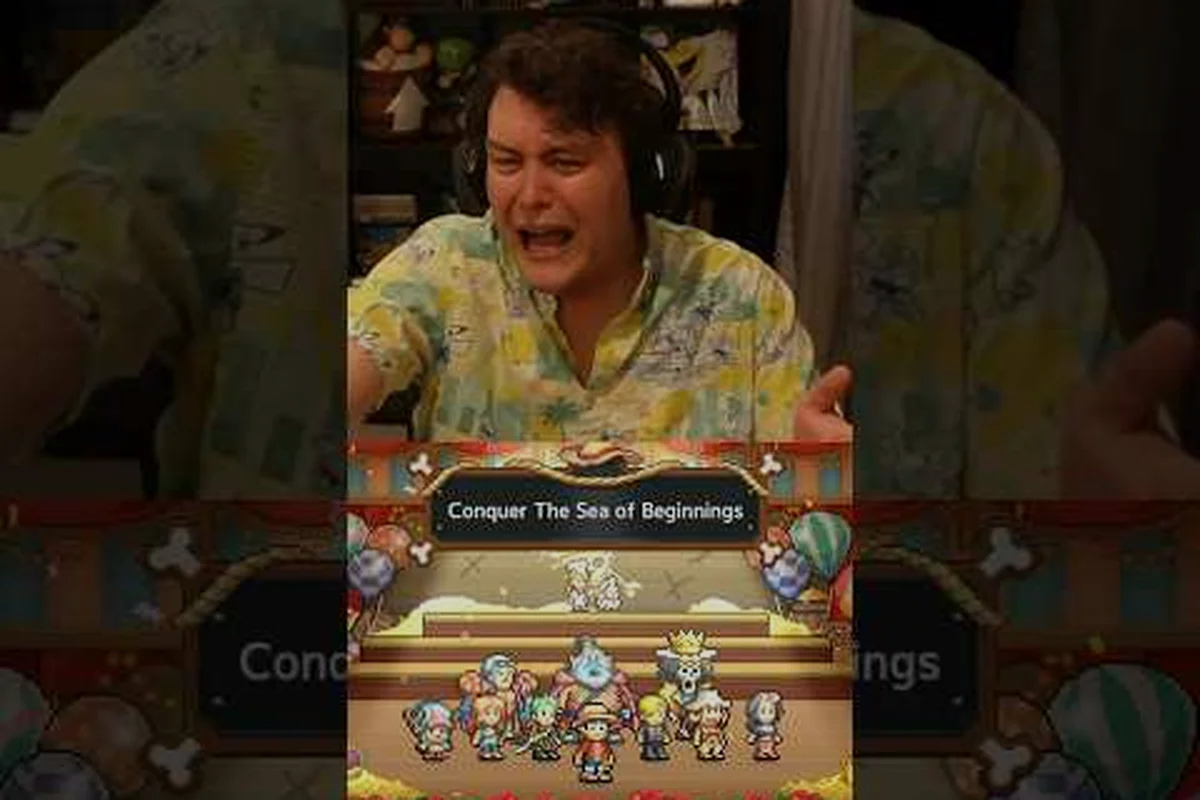
The question of whether ONE PIECE: Grand Gourmet is canon has been circling fan communities ever since Bandai Namco and Kairosoft announced their collaboration. Unlike a typical licensed tie-in, this management sim carries the weight of the Baratie's legacy, which makes its placement in the official timeline a genuinely interesting puzzle. The answer matters because it changes how you read every character interaction, restaurant upgrade, and story beat in the game.
Officially, Bandai Namco describes the project as an original story supervised under the ONE PIECE license, which is a meaningful distinction from the manga's main continuity. That phrasing tells us the game is not adapting a specific arc, nor is it filling a gap that Eiichiro Oda has mapped out in the source material. Instead, the team built a fresh narrative around established characters, which is a common approach for spin-off titles that want creative freedom without breaking the rules of the world.
What makes this case more interesting than most is the setting. The game anchors its premise on Zeff's restaurant heritage, pulling Patty and Carne from the Baratie arc into the core cast. That decision roots the story in a specific place and time, even if the developers have not officially stated exactly when the events unfold relative to the manga.
What Official Sources Say About the Canon Status
The official Japanese website for the game, which you can check at the official ONE PIECE: Grand Gourmet story page, describes the narrative as an original story featuring the Straw Hat Crew alongside the Baratie's legacy characters. The key phrase here is "original story," which in the context of licensed anime games typically signals a non-canon spin-off rather than a continuation of the main plot.
Bandai Namco's European press release for the game, published on their official Bandai Namco news page, echoes this framing. The announcement emphasizes the collaborative nature of the project and the involvement of the franchise's license holders, but it stops short of claiming the story fits into the manga's continuity. That omission is telling, because when a game is officially canon, publishers usually say so explicitly to drive fan interest.
The absence of a definitive statement cuts both ways, though. It does not confirm the game is non-canon either, because the franchise has a history of leaving spin-offs in a gray zone. Some titles, like the One Piece movies, receive direct input from Oda and are considered part of the broader narrative. Others, like the various fighting games, are clearly alternate-universe experiences. Grand Gourmet sits somewhere in the middle, and the developers seem comfortable leaving it there.
What we can say with confidence is that the game respects the source material. The character designs, the restaurant mechanics, and the tone all align with the manga's depiction of the Baratie and its staff. That level of care suggests the team wanted to create something that feels authentic, even if it is not officially part of the main timeline.
Timeline Placement: Where Grand Gourmet Fits
The "Supervised Under License" Label: What It Actually Covers
Bandai Namco's official story page (op-restaurant.bn-ent.net) describes Grand Gourmet as an "original story supervised under the ONE PIECE license"—but that supervision is narrower than fans assume. It certifies the Straw Hat Crew's characterization and Baratie legacy elements, not manga timeline continuity. The press release from 23 October 2026 repeats the identical phrasing, confirming the label is a legal/quality gate, not a canon declaration. Notably, neither source states a timeline placement relative to the manga, leaving the game's position in the overarching narrative deliberately ambiguous. Notably, neither source states a timeline placement relative to the manga, leaving the game's position in the overarching narrative deliberately ambiguous—a structural choice that mirrors how the One Piece Grand Gourmet Story spin-off similarly plays with its own canonicity, as explored in our One Piece Grand Gourmet Story analysis, where the label's function as a quality gate rather than a narrative anchor becomes even more pronounced.
The 400-Character Roster: Exclusive Interactions Beyond the Main Cast
Steam's store page confirms more than 400 ONE PIECE characters appear as staff and customers in pixel style—a first for a Kairosoft game. Bandai Namco explicitly states that character events and special character interactions are exclusive to this title, meaning these aren't recycled sprites from other Kairosoft games. Each visiting customer brings their own tastes, which mechanically translates into varied order preferences that affect menu planning and ingredient stock. This roster depth is the game's primary content driver, distinguishing it from both the manga's focused Baratie arc and Kairosoft's previous licensed titles.
| Canon Evidence Source | Official Statement | Timeline Placement |
|---|---|---|
| Official website (op-restaurant.bn-ent.net) | Original story supervised under the ONE PIECE license | Not officially stated |
| Bandai Namco EU press release (Oct 23, 2026) | Features Straw Hat Crew and Baratie legacy characters Patty and Carne | Not officially stated |
| Steam store page | 400+ ONE PIECE characters appear as staff and customers | Not officially stated |
| Character Category | Confirmed Count | Exclusive Content Type |
|---|---|---|
| Playable/staff characters | 400+ (total roster) | Character events exclusive to this title |
| Baratie legacy characters | 2 (Patty and Carne) | Manga Baratie arc anchors premise |
| Visiting customers | 400+ (total roster) | Each customer brings individual tastes |
The game's timeline placement is a topic of active debate, because the developers have not provided a clear answer. However, the available evidence points to a specific window in the story. The presence of Patty and Carne as central characters suggests the narrative takes place after the Straw Hats leave the Baratie, since the two cooks are still running the restaurant when Luffy and his crew depart.
The most commonly cited theory places the game's events during the two-year time skip that occurs after the Marineford arc. During that period, the Straw Hat crew scattered across the globe for training, and the world experienced significant changes. A restaurant management story set in that window would have room to breathe without conflicting with the main plot, because the crew is not actively traveling together.
Another possibility is that the game exists in a floating timeline, which is common in licensed spin-offs. Under this model, the story is not tied to a specific point in the manga but instead exists in a self-contained bubble where the characters can interact without worrying about continuity. This approach is popular in games because it allows developers to feature characters from different arcs together without explaining how they met.
The official materials do not clarify which of these interpretations is correct, and the developers have not commented on the timeline directly. Based on community analysis, the two-year time skip theory has the most support, because it creates the fewest contradictions with the source material. That said, the game's story is designed to be accessible to newcomers, which means it does not rely heavily on knowing exactly when it takes place.
Connection to the Anime and Manga Continuity
The connection between ONE PIECE: Grand Gourmet and the anime is more about atmosphere than narrative. The game features over 400 ONE PIECE characters appearing as staff and customers, according to the ONE PIECE: Grand Gourmet Steam page. That roster includes characters from across the entire series, which means the game is pulling from the full breadth of the franchise rather than a single arc.
This approach creates an interesting dynamic. On one hand, the game feels like a celebration of the series, with familiar faces popping up as customers who bring their own tastes and preferences. On the other hand, the sheer variety of characters makes it difficult to pin down a specific timeline, because characters from different eras coexist in the same restaurant.
The manga references in the game are more subtle but equally important. The Baratie itself is a direct reference to the Baratie arc, and the game's focus on Zeff's culinary philosophy ties back to his backstory with Sanji. Players who know the source material will recognize these nods, while newcomers can enjoy the game without needing that context.
According to community reports, the game also includes special character interactions exclusive to this title, which means the developers created new dialogue and scenarios that do not appear in the manga or anime. These exclusive moments are a double-edged sword for canon debates, because they add new lore while also making it clear that the game is operating outside the main continuity.
Manga References and Easter Eggs Worth Finding
Patty and Carne: Baratie's Legacy Characters as Narrative Anchors
The game pulls Patty and Carne directly from the manga's Baratie arc (chapters 43–68), making them the primary continuity link to the source material. In the manga, the pair served under Zeff alongside Sanji; their presence here grounds the restaurant premise in established lore rather than inventing new background characters. Zeff's restaurant heritage anchors the entire setup, with the game's story presumably exploring how the Straw Hats interact with these familiar faces in a culinary context. This is the sole concrete manga continuity hook the official sources confirm.
Dorayaki Shop Formula vs. Licensed IP: The Kairosoft Mechanic Blend
Community consensus on r/Kairosoft frames Grand Gourmet as the Dorayaki Shop Story formula crossed with a licensed IP. That means auto-balancing difficulty—the game scales customer expectations and revenue targets to your current restaurant level—plus deep stat loops where ingredient quality, dish mastery, and staff training compound over time. Kairosoft's 25+ years of management sims (Game Dev Story, Hot Springs Story) inform the core loop, but this is the studio's first Shueisha license at this scope. The pixel art presentation is consistent with their catalog, yet the 400-character roster and licensed story supervision are unprecedented for the studio.
| Kairosoft Predecessor | Release Era | Shared Formula Element with Grand Gourmet |
|---|---|---|
| Game Dev Story | Early Kairosoft catalog | Core management sim loop with deep stat progression |
| Hot Springs Story | Early Kairosoft catalog | Facility placement and customer satisfaction mechanics |
| Doraemon Dorayaki Shop Story | Licensed IP predecessor | Food-preparation gameplay crossed with licensed characters |
The game is packed with references that reward long-time fans, and hunting for them adds a layer of enjoyment to the restaurant management loop. The most obvious references are the characters themselves, but the game also includes subtler nods that require a deeper knowledge of the series.
Here are some of the notable references and easter eggs reported by players:
-
Zeff's missing leg: The game's depiction of Zeff includes his signature missing leg, which is a direct reference to the flashback where he sacrificed it to save Sanji. The detail is easy to miss in the pixel art style, but it is there for observant players.
-
Patty and Carne's rivalry: The two cooks have a running gag in the manga about their competitive cooking, and the game preserves that dynamic. Their interactions in the restaurant reflect their personalities from the Baratie arc.
-
Sanji's cooking philosophy: While Sanji is not a central character in the game, his influence is felt through the cooking mechanics. The game emphasizes the idea that food should bring joy, which mirrors Sanji's approach to cooking.
-
Baratie menu items: Some of the dishes in the game reference specific foods from the manga, including the seafood dishes that the Baratie was known for. These menu items are a nice touch for fans who remember the arc.
The easter eggs in the game are not just visual nods, though. Some of them are tied to gameplay mechanics, such as certain characters triggering special events when they visit the restaurant. These events often include dialogue that references their manga or anime appearances, which adds depth to the experience.
How Kairosoft's Style Shapes the Story Presentation
Understanding how Kairosoft approaches licensed properties helps explain why the game feels the way it does. The studio has over 25 years of experience with management sims, including titles like Game Dev Story and Hot Springs Story, and their style is characterized by auto-balancing difficulty, deep stat loops, and charming pixel art. According to community consensus on the Kairosoft subreddit, Grand Gourmet is essentially the Dorayaki Shop formula crossed with a licensed IP, which means the story takes a backseat to the management mechanics.
This is the first time Kairosoft has handled a Shueisha license at this scope, and it shows in how the game balances story and gameplay. The narrative is present, but it is structured to support the restaurant management loop rather than drive it. Players who expect a story-heavy experience may be surprised by how much of the game is focused on running the restaurant efficiently.
The game's story presentation also reflects Kairosoft's signature approach to progression. The narrative unfolds in small beats as players expand their restaurant, unlock new characters, and complete objectives. This structure works well for a management sim, but it means the story is not the main draw for most players.
That said, the game's handling of the ONE PIECE license is notably respectful. The characters are portrayed accurately to their manga personalities, and the game does not force them into situations that contradict their established traits. This attention to detail suggests the developers understood the importance of getting the characters right, even if the story itself is not canon.
Is the Story Worth Following for New Players
For players who are new to the ONE PIECE franchise, the question of whether the game is canon matters less than whether the story is enjoyable on its own terms. The game is designed to be accessible, with the official materials describing it as an original story that does not require prior knowledge of the series. That means newcomers can jump in without feeling lost.
The story's focus on the Baratie and its legacy is a good entry point for newcomers, because it introduces the world through a relatable lens. The restaurant setting is easy to understand, and the characters are memorable enough to carry the narrative. Players who enjoy the game may find themselves curious about the source material, which is a win for the franchise as a whole.
For players who are already familiar with the series, the story offers a different perspective on familiar characters. Seeing Patty and Carne take center stage is a treat, because they are supporting characters in the manga who rarely get the spotlight. The game gives them room to shine, which is a refreshing change of pace.
The story also ties into the broader theme of the series, which is about pursuing dreams and building something meaningful. The game's focus on building a successful restaurant echoes Luffy's journey to become the Pirate King, even if the scale is smaller. That thematic connection gives the story more weight than a typical spin-off.
Frequently Asked Questions
Is ONE PIECE: Grand Gourmet considered canon?
No official statement confirms the game as canon. Bandai Namco describes it as an original story supervised under the ONE PIECE license, which typically signals a spin-off rather than a main-continuity entry. The developers have not placed the events within the manga timeline, leaving the canon status open to interpretation.
When does ONE PIECE: Grand Gourmet take place in the timeline?
The timeline is not officially confirmed, but community analysis suggests the events likely occur during the two-year time skip after Marineford. This placement allows the Straw Hats to be absent while Patty and Carne run the restaurant. The game features characters from across the series, which complicates a precise timeline reading.
Does the game connect to the anime or manga directly?
The game shares the anime's visual style and character portrayals, but it does not adapt any specific arc. It includes over 400 characters from the series as staff and customers, according to the Steam page. The story is original, with exclusive character interactions that do not appear in the manga or anime.
Are there manga references and easter eggs in the game?
Yes, the game is packed with references for long-time fans. Notable examples include Zeff's missing leg, Patty and Carne's competitive cooking rivalry, and menu items inspired by Baratie dishes. Some references tie into gameplay mechanics, with certain characters triggering special events when they visit the restaurant.
Do I need to know the ONE PIECE story to enjoy the game?
No, the game is designed to be accessible to newcomers. The story is self-contained and focuses on running the Baratie, so prior knowledge of the series is not required. That said, fans of the manga will appreciate the deeper references and character interactions that the game includes.